
What it was
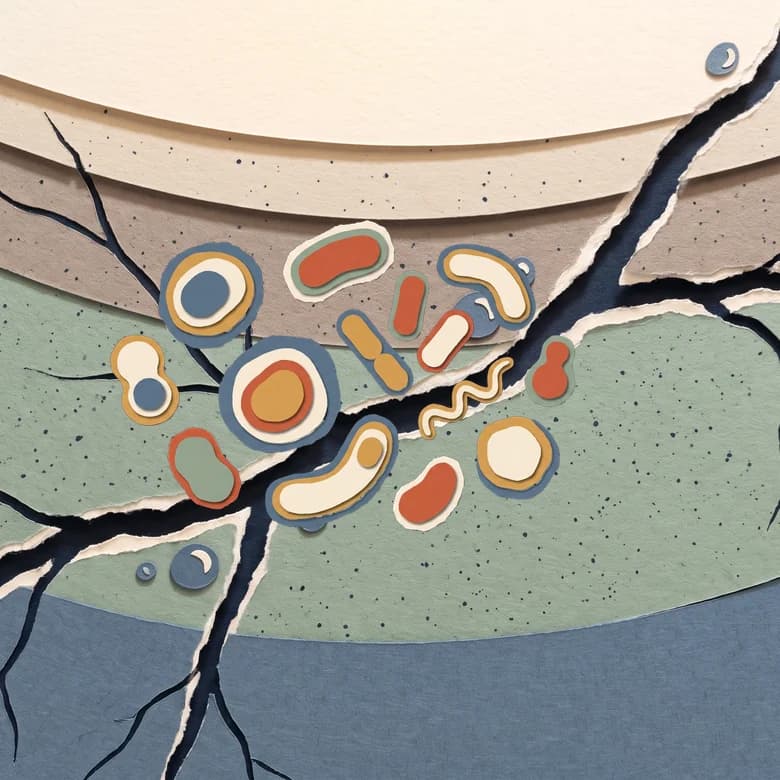
A crack thinner than a hair runs through buried rock. Water creeps along it, and tiny cells make a home in the gap. You could walk far above them without knowing there was life beneath the ground.
These microbes belong to the deep biosphere, life below soil and ordinary seafloor mud. Many are bacteria or archaea (ar-kee-uh), a separate branch of single-celled life. Some get fuel from chemical reactions between rock and water. No sunlight has to reach their walls.
When and where
The chapter visits cells alive underground today. Mine shafts and drill holes let scientists reach rock below land and the seabed. Ancient stone can hold current life. Its age cannot tell you when the cells living there first moved into the cracks.
How we know
A drill can carry surface cells down, so scientists mark the drilling fluid with tracers, substances they can track. They shave the outside from rock samples and test the protected center. Think of taking bread from the heart of a loaf, away from the handled crust.
Tests also look for signs of active chemistry. Natural radiation can split water and make hydrogen fuel. Some cells tap reactions like these for energy, a way of life called chemolithotrophy (kee-moh-lith-ot-ruh-fee): living on rock chemistry. The stone acts like a slow battery.
Still a mystery
Nobody knows the full reach of this buried world. Heat seems to set a limit more than darkness does. A cell in a photo might be dead, and old DNA can linger, so scientists check several clues. Huge cell counts alone cannot tell us that deep life outweighs life above.