
What it was
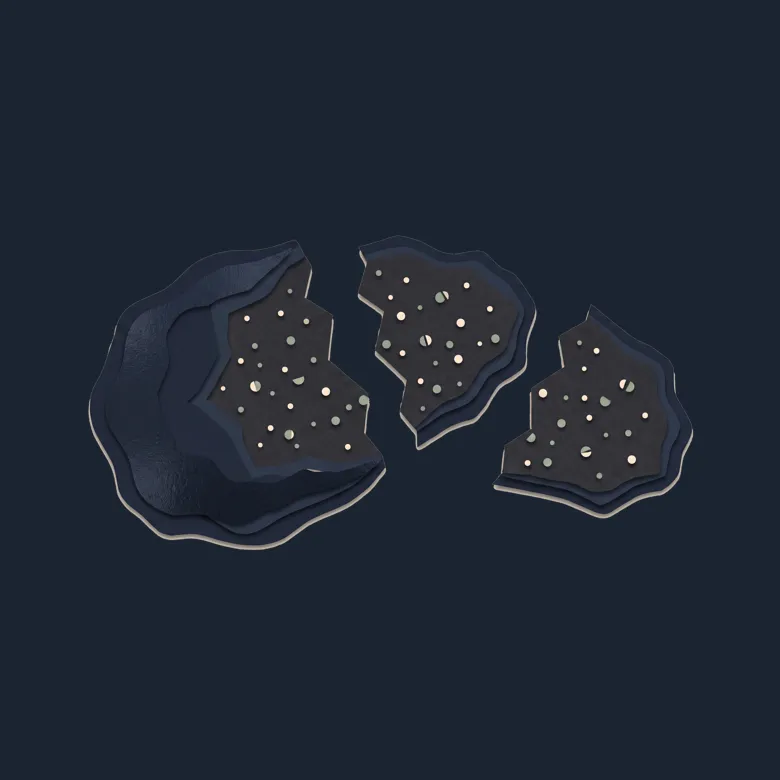
Fill a wheelbarrow with black stones. That is the chapter's picture of the pieces recovered from Murchison, a meteorite packed with chemistry made before they landed on Earth. Hold one and you hold parts that living cells also use.
Some of those parts are amino acids, molecules that link into proteins like beads on a thread. Scientists have found more than 80 kinds in Murchison. Many fall outside the set that cells usually choose for proteins. Rock and water can build parts without being alive.
When and where
The stones fell near Murchison in Victoria, Australia, on September 28, 1969. Their material formed much earlier in the Solar System. The fall gave people a sample to test; it did not mark the day the molecules inside were made.
How big
People gathered about 220 pounds (100 kilograms) of rock from the ground. That is the wheelbarrow load, not the size of the whole stone before it struck the air. The many pieces gave labs plenty of material to cut open and compare.
How we know
Scientists test the molecules' shapes and their mix of heavy and light atoms. Some patterns differ from Earth-made material. Unusual amino acids give another clue. Together, the tests help separate space chemistry from contamination, the stuff that got in after the stone arrived.
Still a mystery
We still do not know how such parts became a living cell. And even real space rocks can pick up false clues: nearby dirt holds some of the same chemicals. Scientists test the soil as well as the stone, checking the cargo against the ground it hit.