
What it was
Crush a spearmint leaf and the scent reaches your nose. One molecule behind it is carvone. Its atoms can make mirror twins, like your left and right hands, with the same parts facing different ways.
One twin smells of spearmint. The other gives caraway its scent. Your nose has shaped detectors, so the way a molecule fits matters. Turn a left hand around as much as you like; it still will not become a right hand.
When and where
Spearmint is a flowering member of the mint family, native from Europe to China and grown elsewhere too. It favors moist ground. It is a perennial, which means the same plant can live through more than one growing season instead of starting again from seed each year.
Its stems are square. Underground stems called rhizomes spread through the soil and send up shoots. A stem touching the ground can also put down roots. That helps a patch of spearmint spread beyond the spot where it started.
How big
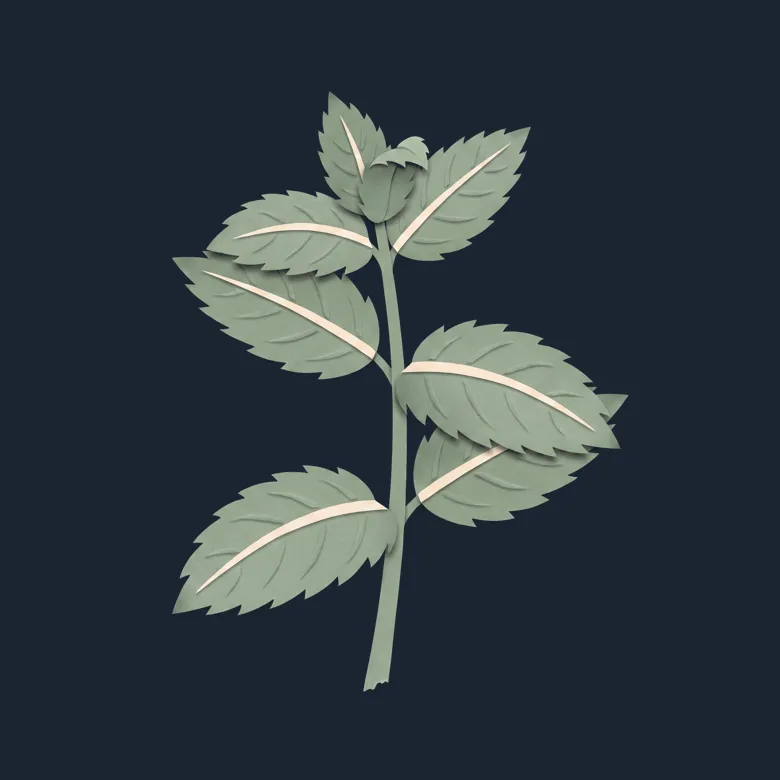
The plant often grows about 1 to 2 feet (30 to 60 centimeters) tall. Its green leaves have toothed edges and grow in opposite pairs. Small flowers gather in spikes. The mint smell gives you another clue when you rub a leaf.
How we know
Chemists separate the mirror forms of carvone and compare them. The different scents make chirality (kye-ral-ih-tee), or handedness, something you can notice with your own nose. A tiny change in which way the shape faces gives a clear everyday difference.
Still a mystery
Nobody knows how early life settled on its shared molecular hand. Spearmint shows why shape can matter; it cannot date the first choice. The leaf in your hand carries one form, and the mirror twin smells different.