
What it was
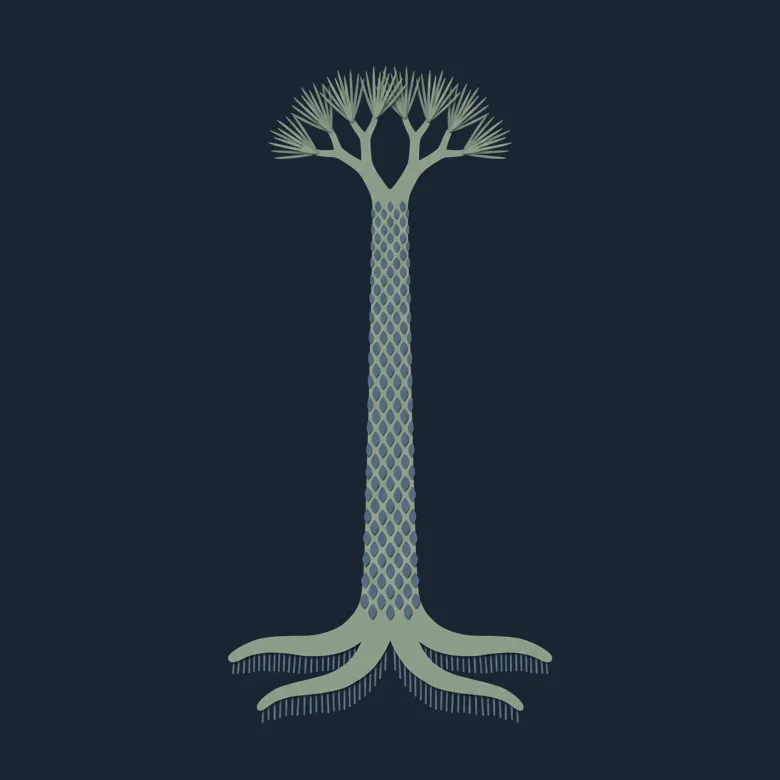
A long fossil with pits along it looks almost like a snake. It is a root. Above it once grew a scale tree, with diamond-shaped leaf marks covering its trunk. Pieces of the same plant can look very different once they turn to stone.
Lepidodendron (lep-ih-doe-den-dron) was a tree-sized lycophyte, a relative of club mosses. Its name belongs to the patterned trunk. The root parts have another fossil name, Stigmaria (stig-mair-ee-uh). Scientists often found the pieces apart before they could fit the whole plant together.
When and where
These trees grew during the Carboniferous Period. A museum stem from Indiana shows the diamond-shaped leaf bases. Root fossils from scale trees also turn up in Tennessee and Illinois. You can compare their patterns even when no trunk is attached.
The roots spread sideways in wet ground and branched again and again. Spaces inside held air, helping them work in soggy soil with little oxygen. Much of that hidden support lay close to the surface beneath the tree.
How we know
Round pits on the roots mark where smaller rootlets joined them. If a root rotted away, mud could fill the hole and leave a cast. Some roots kept fine cell details when minerals grew through them in lumps called coal balls.
The trunk and roots give different clues. Leaf bases help identify the stem; rootlet marks reveal the buried spread. Some fossils turn up joined, helping scientists connect plant parts that had been given separate names.
Still a mystery
A loose root cannot always tell you which trunk it belonged to. We do not know the whole plant behind every piece. In Chapter 017, the scale tree appears briefly in the rule scene and in the final row of living things.