Ice a mile thick carved this desert canyon. It is in the dry northwest of Namibia. But its floor is covered in long, straight scratches, all pointing the same way. Stones frozen into the bottom of a glacier made them. So how did a mile of ice get to Africa?
Africa was not where it is now. It was locked into a giant southern continent called Gondwana, and Namibia lay far to the south. An ice sheet buried it, hilltops and all. The ice crept west, toward what is now Brazil, and it carried boulders up to 10 feet across. Where it squeezed between the hills, it dug. It cut valleys up to 80 miles long and three quarters of a mile deep. Each one has a flat floor and steep walls, like a bathtub.
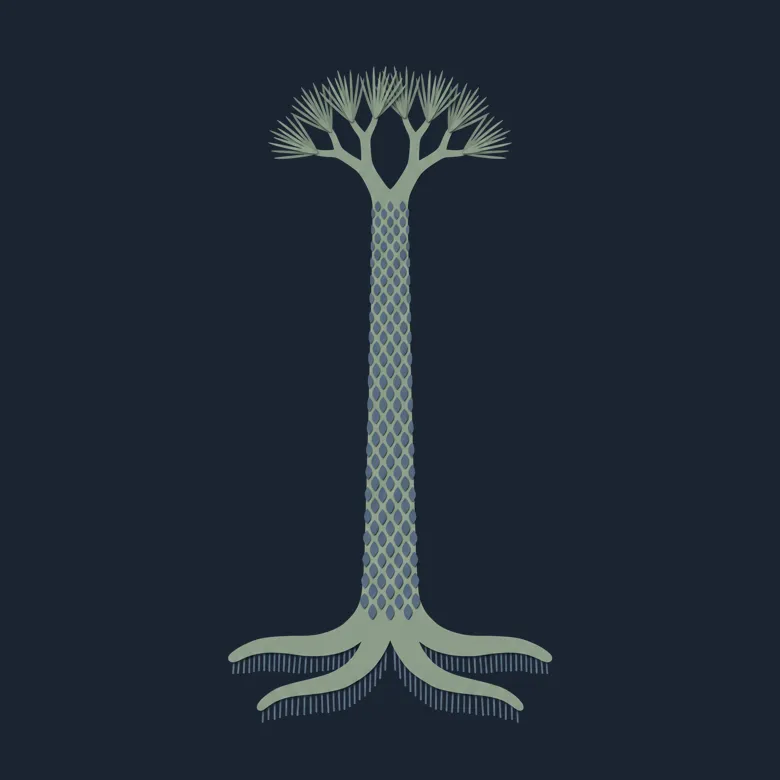
But go to the equator at that same moment. There, the land is swamp forest, wet all year. Trees with bark like snakeskin stand a hundred feet tall in black water. These are the forests that became coal. So the age of coal was an ice age. And it was the longest ice age of the last half a billion years.
What did ice at the pole have to do with a swamp at the equator? The sea tied them together. Ice on land is water taken out of the ocean. So when the ice sheets grew, the sea fell, perhaps by 300 feet or more. The swamps spread across the new, low ground. Then the ice melted back. The sea returned, drowned the forest, and buried it in mud.
Then the ice grew again. Each round left the same stack of rock. River sand, then coal, then dark mud from the sea floor, then limestone. Then sand again. In 1936, two American geologists looked at those stripes and blamed ice on the far side of the planet. Most geologists still agree, though they argue over how big each swing was.
And the forest was feeding the ice. Every trunk buried as peat was carbon taken out of the air. Less carbon dioxide means a colder planet. One climate model suggests the coal forests cooled Earth so far that it nearly froze over completely.
Then the forest broke. About 305 million years ago, the tropics were drying, and nobody is sure what tipped them. Across what is now Europe and North America, the giant scale trees died back, and tree ferns took their place. In China, the old swamp forest held on for millions of years more.
So what happened to the animals? That is still argued. A study in 2010 found amphibians hit hard, and the survivors cut off in islands of forest. But a second team, in 2018, corrected for where fossils happen to be collected. They looked for those islands and did not find them. They found animals spreading out instead, led by the ones that no longer needed water to lay their eggs.
In Namibia, the ice was losing too. Just under 300 million years ago, the great sheet had shrunk to glaciers in the valley floors. They were about 300 feet thick. Then those melted, and the sea came in behind them. For a while this desert canyon was a fjord, with tides, and icebergs dropping stones into the mud.
Then the fjord filled up. Sand and mud packed it to the top. A hundred and thirty million years ago, lava poured over all of it. Since then, rain and rivers have stripped the filling back out, down to the floor the ice left.
The ice age itself ended about 260 million years ago, long before the first dinosaur. Earth did not grow ice sheets like that again until the ice age we are living in now.
So the canyon is still there. It has the shape of a fjord in Norway, in a desert, with the scratches still on its floor. Ice a mile thick did that. And the same ice put the stripes in the coal.