
What it was
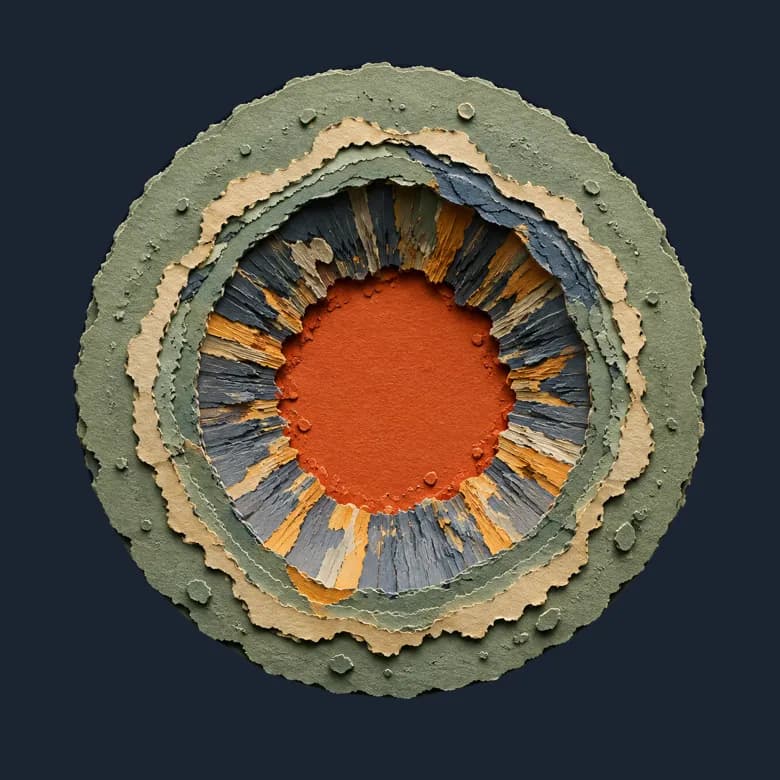
A space rock hits Earth and makes a lake of melted crust. As the lake cools, heavy drops sink toward the floor and collect there. That buried floor will hold ore beneath a city.
The city is Sudbury, and the ore carries nickel and copper. Much of the metal was already spread through Earth's crust. The crash gathered it into rich deposits. A mine can follow the layer where those drops collected long after the lake hardened.
When and where
The impact hit what is now Ontario about 1.85 billion years ago. Later pressure squeezed the crater into an oval. You cannot look at today's basin and trace the fresh round bowl exactly. The rock has moved since the day it melted.
How big
The chapter uses a falling body about 6 to 9 miles across (10 to 15 kilometers), wider than Everest is tall. The crater spanned about 124 miles (200 kilometers). These are estimates. Debris flew far enough to leave a layer in Michigan that you can still put your hand on.
How we know
The scattered debris marks the blow. Inside the basin, a thick sheet of once-molten rock records slow cooling. Drops rich in sulfur and metal parted from the surrounding melt and sank. Later squeezing tilted the sheet and brought some buried ore closer to the surface.
Still a mystery
Scientists still argue about what hit Sudbury and how long the melt took to cool. A comet is one idea, so we call the body an impactor, the thing that struck. Its effect is much easier to find: mines still follow the metal gathered near that old floor.