
What it was
An orange slides into a basketball and spreads across its side. That is the strange shape of this idea: a small moon piling onto our Moon as a thick coat of rock.
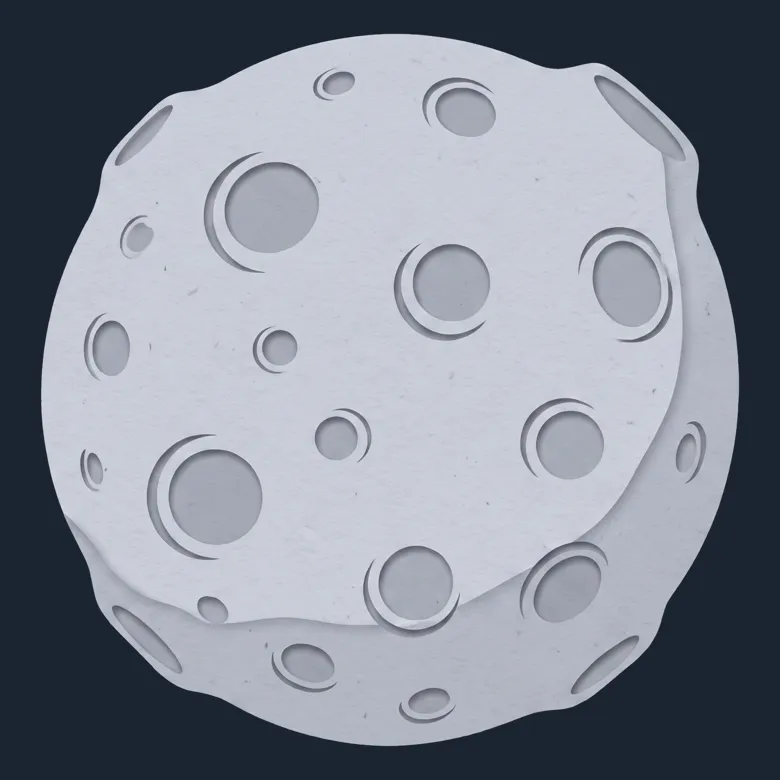
In the companion-moon model, the impact that made our Moon left a smaller neighbor too. Gravity held the small moon in a safe spot on their shared path around Earth. For a while, the pair could circle without meeting. The portrait shows that proposed lost world.
When and where
The story belongs near the start of the Earth-Moon pair. As our Moon crept outward, the Sun's pull reached farther into the companion's safe spot. The hold could fail. Once it did, the smaller body could slip toward the larger one.
The chapter's Clock sets the scene in Earth's early story. It cannot give a date for a crash that nobody has confirmed. This is a model of how a companion might have lived and met its end.
How big
The proposed moon was about a third as wide as ours, hence the orange beside a basketball. Its modeled crash was slow by space standards, slower than sound through rock. Much of the material could pile up instead of digging a huge blast crater.
How we know
Spacecraft have shown us the Moon's uneven faces. The far side has thicker crust and much less dark lava plain. Gravity maps help measure that hidden shell. You can test a companion crash by asking whether it leaves a shell like the real one.
Still a mystery
Nobody knows if this moon existed. Heat from young Earth could also have made the near and far sides cool differently, and tidal heating is another idea. The thicker far side is the clue they all have to explain.