
What it was
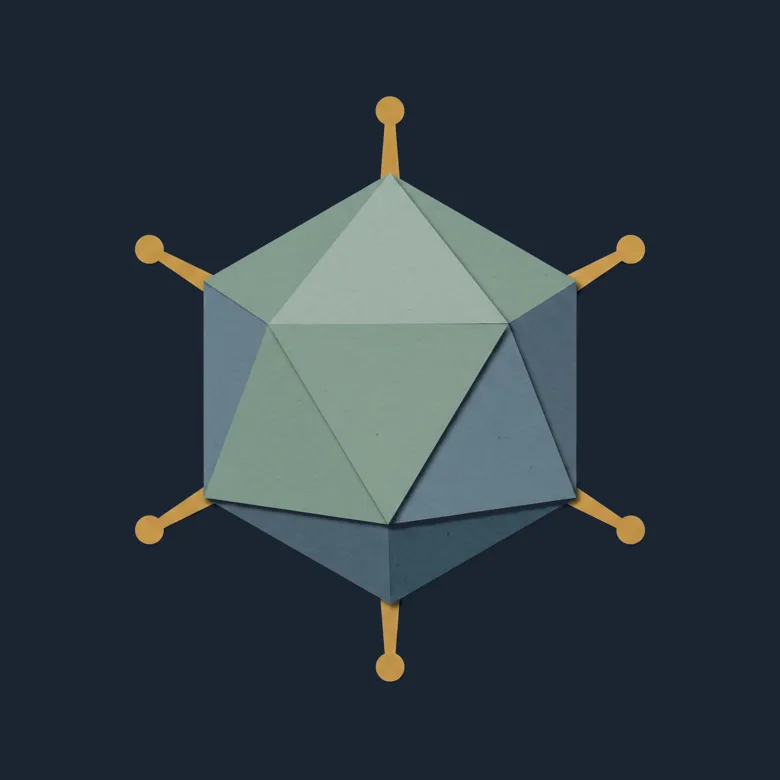
A teaspoon of seawater holds a crowd you cannot see: about 50 million viruses. Each particle carries instructions. It cannot make a copy alone, so it drifts until it meets a cell it can enter.
Inside a host, viral instructions get the cell's machines to build more viruses. The particle has no full cell of its own to grow and feed. Scientists agree on that need for a host, even while they debate what to call it.
When and where
Viruses fill the sea today, breaking cells open and spilling their contents back into the water. The teaspoon count is a rough picture; each spoon holds a different crowd. A small amount of clear water can contain a huge number of these particles.
Early cells also left signs of defenses against invading code. Those clues suggest a very old fight, but they cannot name all the invaders. A gene, a stretch of inherited instructions, can last long after the body that first carried it has gone.
How we know
Scientists compare viral genes and shells. There is no single gene shared by every virus, which blocks a simple family tree for the whole group. Different groups may have started in different ways. Some could come from escaped genes; others from cells that lost parts.
Viruses leave marks inside hosts too. Ancient viral code is part of human DNA, the molecule that stores our instructions. Some of those old bits now do useful work, including a gene that helps form the placenta, the organ supporting a baby before birth.
Still a mystery
Nobody knows when viruses began. Scientists still debate whether they count as alive, and no single origin story fits them all. New finds keep adding unfamiliar shells and new code to the collection.