Scoop up a teaspoon of seawater. It can hold about 50 million viruses, each carrying a tiny set of instructions. You cannot see the crowd in the spoon.
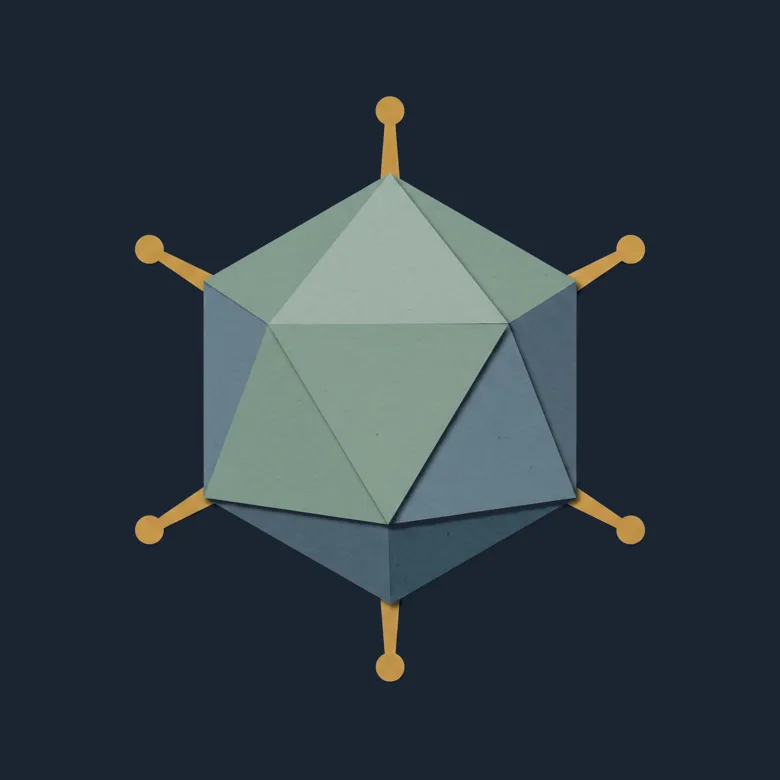
A virus gets its instructions inside a living cell. The cell's own machines then build more viruses. Away from a host, that particle cannot make copies of itself.
So does it count as alive? Scientists still argue about where to draw the line. They also lack a single family tree for all viruses. Living cells share old genes that help trace their roots; viruses have no gene that every kind shares. A gene is a stretch of inherited instructions.
That missing clue makes their beginnings hard to pin down. Some groups may have started as bits of code that escaped cells. Others may come from cells that lost parts while living inside hosts. Different viruses could have different starts.
We can see what they do now. Viruses burst open sea microbes and spill their contents back into the water. Ancient viral genes also sit in your own code. One helps build the placenta, the organ that supports a baby before birth. Something from a virus helps that organ form.