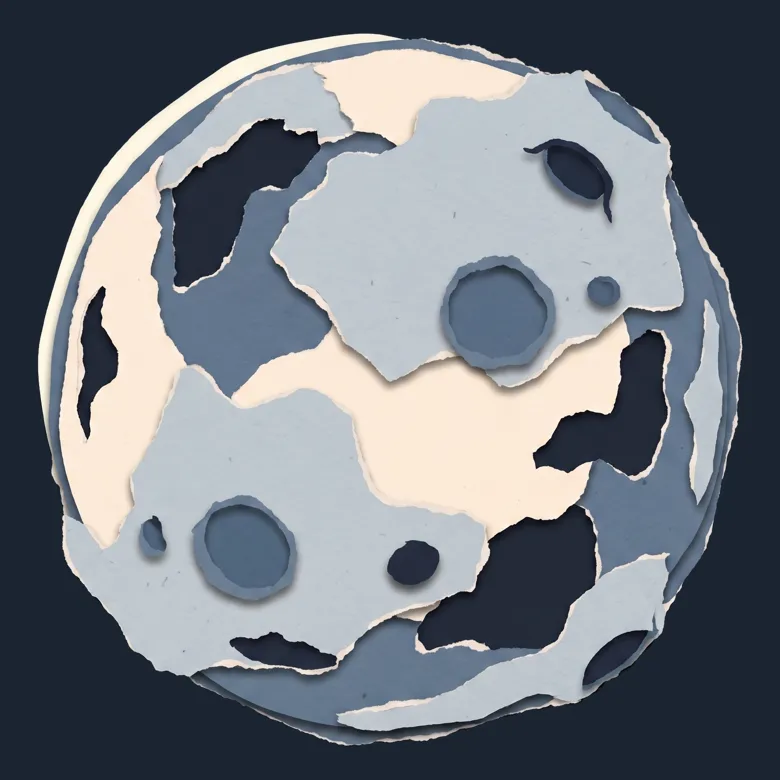
Wet a basketball with about 2 teaspoons of water. That is the chapter's scale picture of Earth's oceans: a thin wet coat on a huge ball of rock. How did the water get here?
Earth grew close to the young Sun, where ice could not cling to dust. Farther out, beyond the snow line, water froze onto grains. Planets growing there could toss wet stones toward the inner worlds.
You can look for the water's fingerprint in its hydrogen atoms. Some are a heavier kind called deuterium (doo-teer-ee-um). Their share of the mix helps scientists compare ocean water with water in space rocks. Comet readings turned out to be harder to untangle than they first seemed.
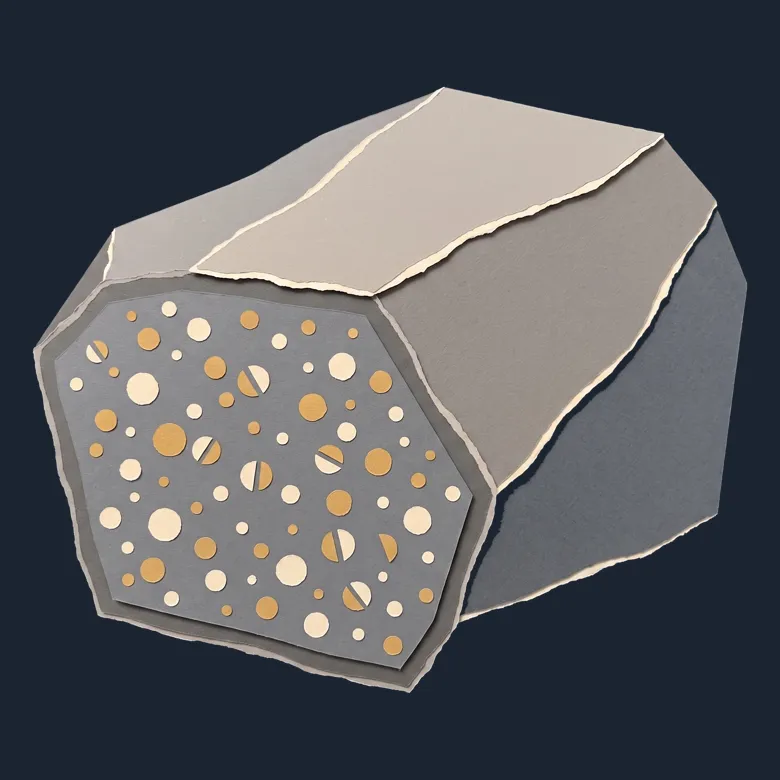
Another clue, the gas xenon, points to comets bringing some air but probably little ocean water. Dark, carbon-rich asteroids look like stronger candidates for much of the sea.
Then spacecraft brought back dust from Ryugu and Bennu. Bennu's grains held salts left by water that had dried away. We are still unsure how much water came from each source; Earth's own building rocks may have held some too. But those tiny salt grains preserve a trace of a vanished brine.