
What it was
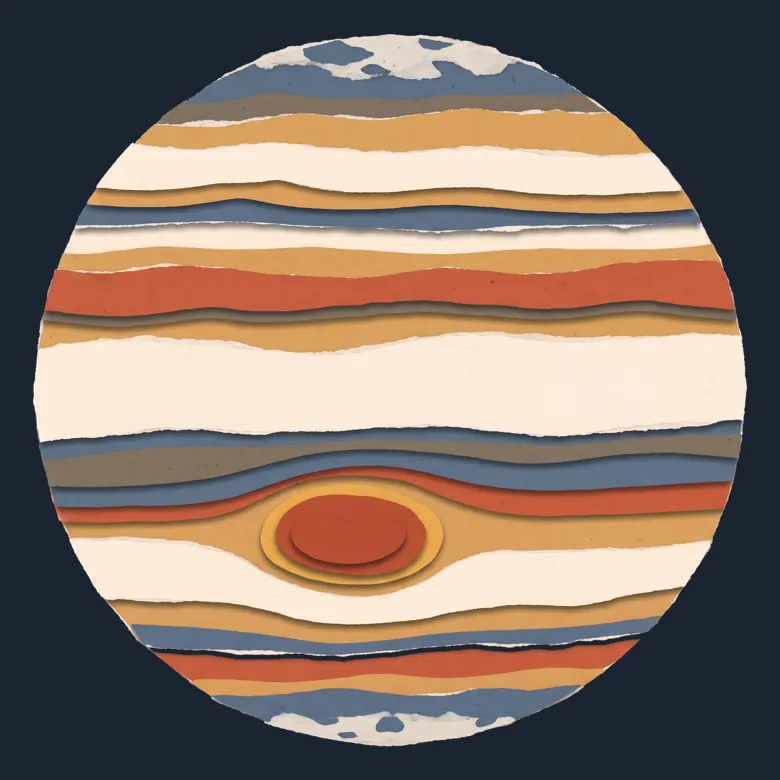
Clouds race around a huge striped ball. Jupiter spins through a day in less than 10 hours. The stripes are clouds in its air, swept into bands around a planet far larger than Earth.
Jupiter grew beyond the young Solar System's snow line, where water could freeze onto dust. With plenty of icy building stuff nearby, a growing core gathered gas. It became a giant while the smaller rocky worlds were still taking shape nearer the Sun.
When and where
The chapter follows an idea called the Grand Tack, a turn like a sailing ship's. Jupiter pulls on gas around it, and the gas pulls back. In the model, that tug draws Jupiter inward toward the path Mars takes today, scattering much of the rubble there.
Then Saturn catches up. Their orbits fall into a rhythm, and the pair move outward together. Some wet stones can get thrown toward the inner worlds. That could help bring water to the growing Earth.
How big
Line up about 11 Earths and you would span Jupiter at its equator. Put it on an imaginary scale and it weighs about 318 Earths. Width and weight tell different parts of just how huge this planet is.
How we know
The clues are still scattered around us. Mars is small, and the asteroid belt holds a mix of rocks from different birthplaces. Meteorite chemistry also records stores of material kept apart early on. Scientists ask whether a growing, moving Jupiter could leave that pattern.
Still a mystery
We do not know Jupiter's exact route. Other models can also move wet rocks inward. The Grand Tack gives us a possible path through the scraps, with no camera there to watch the giant turn.