
What it was
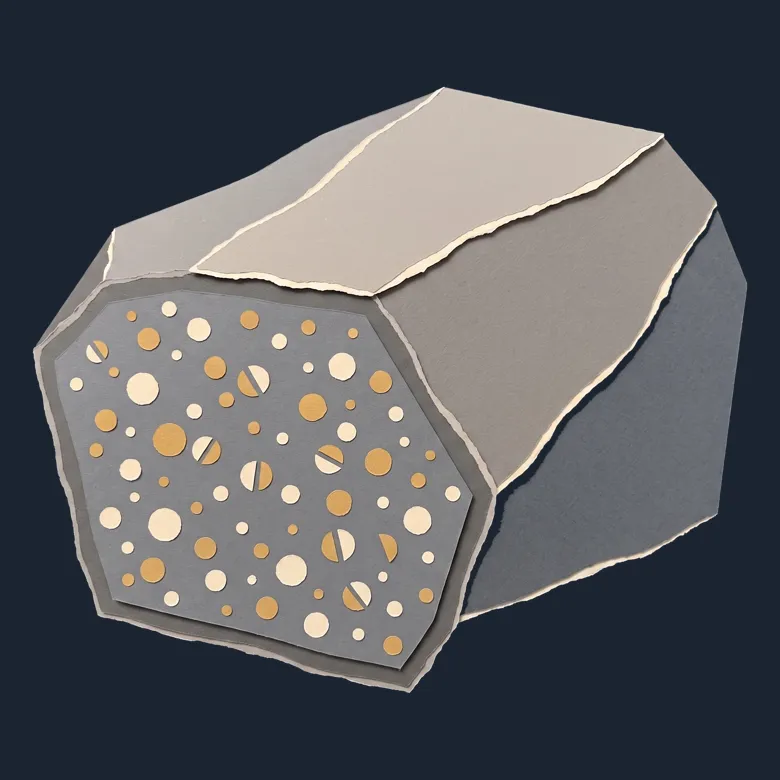
Saw through a dark space rock and pale specks show up inside. Some are round beads about as wide as pinheads. Once, they were drops of melted rock drifting where no planet had yet grown.
A meteorite is a space rock that reaches the ground. Some carbon-rich kinds are carbonaceous chondrites (kar-buh-nay-shus kon-drites). The round beads are chondrules. These stones can also hold carbon-based molecules and minerals with water locked inside them.
When and where
You are holding a mix of old things, not a stone with one simple birthday. Some parts formed around the young Sun. A few grains inside meteorites came from other stars before the Sun existed. Water later changed some material inside the asteroids the stones came from.
How big
The round beads are often pinhead-sized, with a typical range of about 0.1 to 2 millimeters. That is the size of a bead inside the stone. The pale, lumpy patches are something else: some of the earliest solids to cool from gas around the new Sun.
How we know
Atoms that change at a known rate make clocks inside those early solids. Minerals altered by water keep other clues, which scientists compare with Earth's water. Some stones also hold amino acids, the links cells join to make proteins. Chemistry can make those links without help from life.
Still a mystery
Nobody has worked out Earth's full water recipe. Different kinds of building rock may have brought a share. Once a meteorite lands, soil can change it too. Samples fetched straight from asteroids help scientists check what was already there before Earth touched the stone.