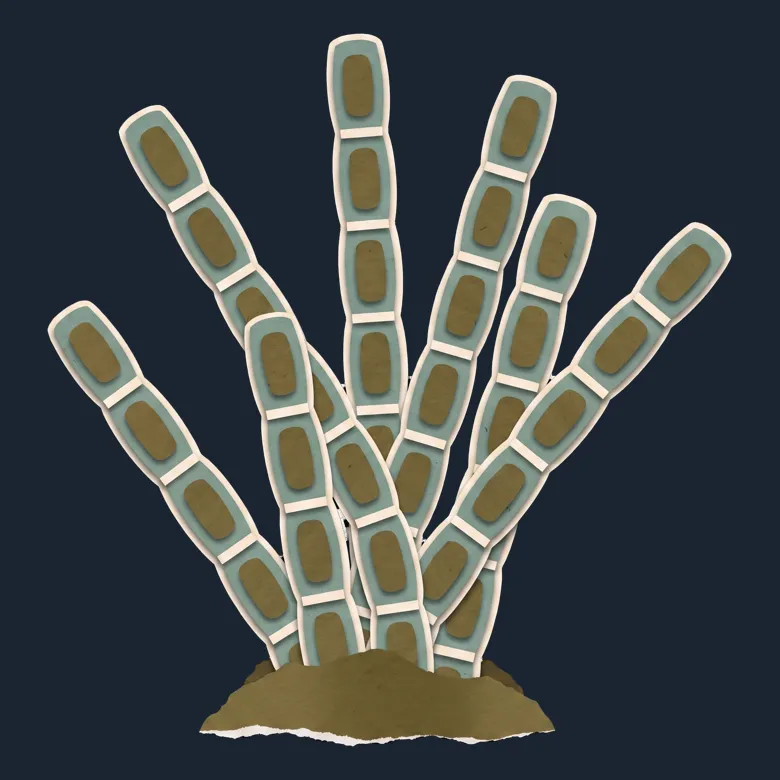
A thread of cells thinner than a hair sits in sunlit water. Bubbles rise. The cells are throwing away a gas that will change the sky: oxygen.
These are cyanobacteria (sigh-an-oh-bacteria), tiny cells that make food with light. That light-powered food making is photosynthesis. Their special trick is splitting water. Earlier ways to catch light could depend on fuel that ran out nearby. These cells can draw from the sea.
Inside, a protein machine catches light and uses the energy to pull water apart. It keeps what it needs to build food and lets oxygen go. The same basic machine works in the leaves you see today.
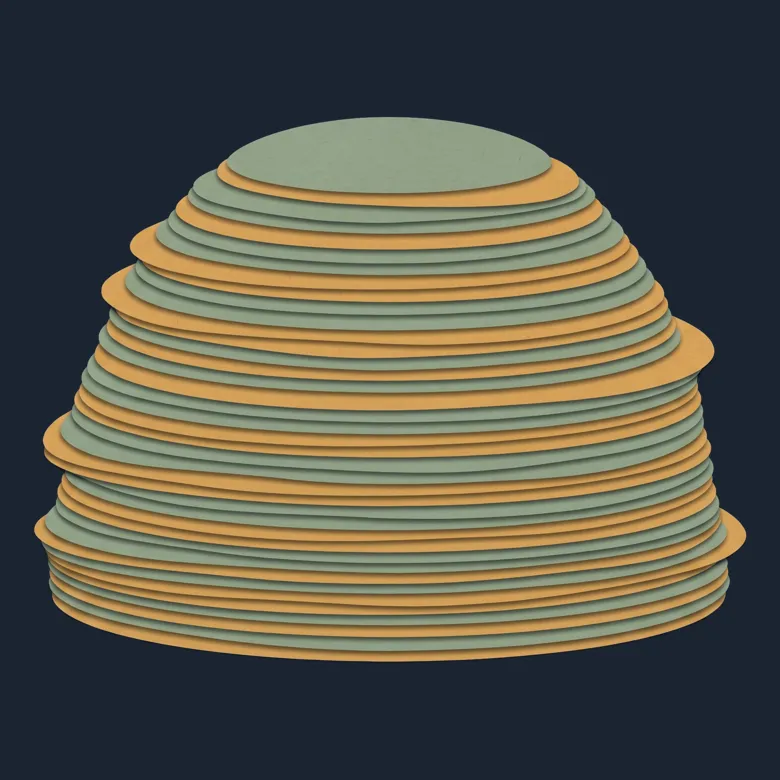
Mats of microbes also catch grains of mud and grow over them. Layer by layer, they build stone mounds called stromatolites (stro-mat-oh-lite). You can still find some growing in shallow water.
Nobody knows the exact date the water-splitting trick began. Some early chemical clues turned out to be dirt from drills and handling. Metals in ancient soils and seabeds give other signs of oxygen. At first, rock and seawater soaked much of the gas up in reactions. A mat could bubble away while the air above it stayed almost empty of oxygen.