
What it was
Bubbles gather above a thin green film in shallow water. Cells narrower than a hair are using sunlight to split water. The oxygen rising from them is waste from the work of making food.
These are cyanobacteria (sigh-an-oh-bacteria), tiny light-using cells. Their way of making food is photosynthesis: catching light to help build sugar. Inside each cell, a protein machine grips water and uses light to pull it apart. The same basic machine works in green leaves today.
When and where
Chemical clues suggest this oxygen-making trick existed by about 3 billion years ago. That dates the clue, not the first cell to do it. For a long time, oxygen could appear in small patches while the wider sky held almost none. Rock and seawater used much of it up.
How big
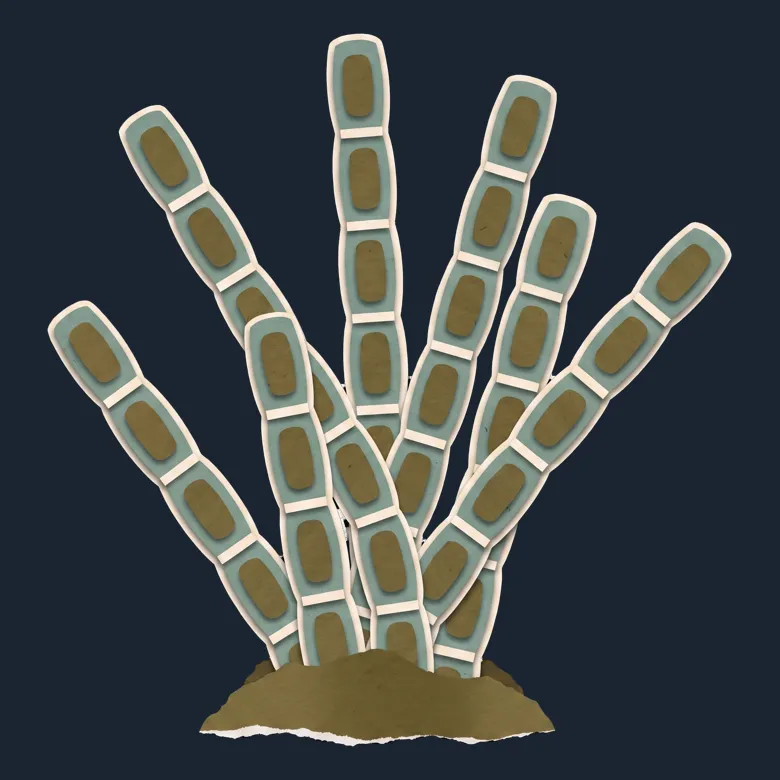
The show's thread is a row of cells far thinner than a human hair. You can see a whole mat because huge numbers gather together. A green film across the mud is a crowd, with each small cell catching light where it sits.
How we know
Metals in ancient soils and seabeds moved in ways that point to oxygen. These clues helped rebuild the case after some earlier tests failed. The supposed old molecules turned out to be contamination, material carried in by drilling or handling. Cleaner tests exposed the mistake.
Still a mystery
Scientists still argue about when oxygen first appeared and why it took so long to fill the air. Cells kept making it; rock kept reacting with it. The balance had to change before the sky could hold much. A stream of bubbles cannot tell you the makeup of the whole sky.