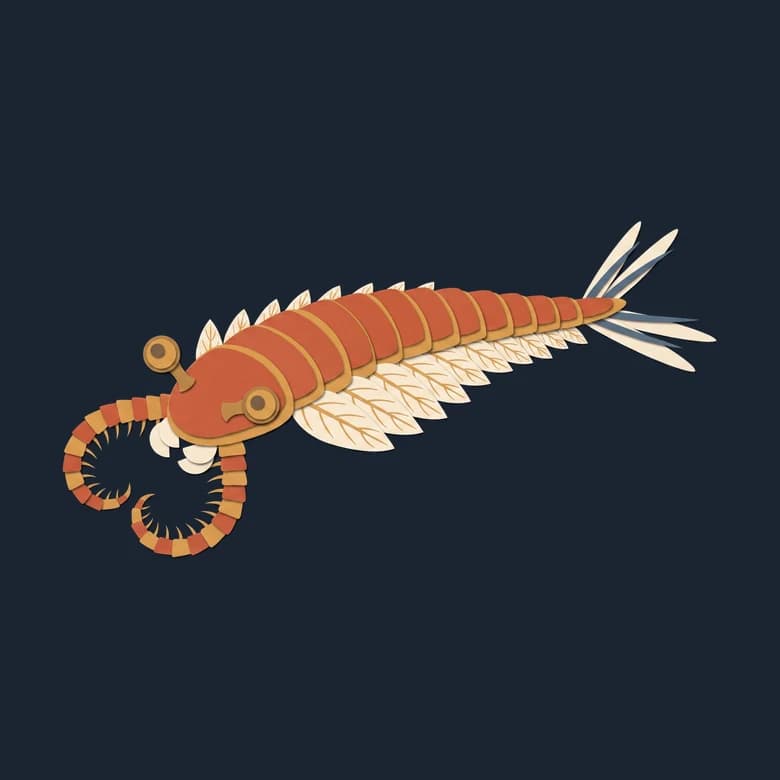
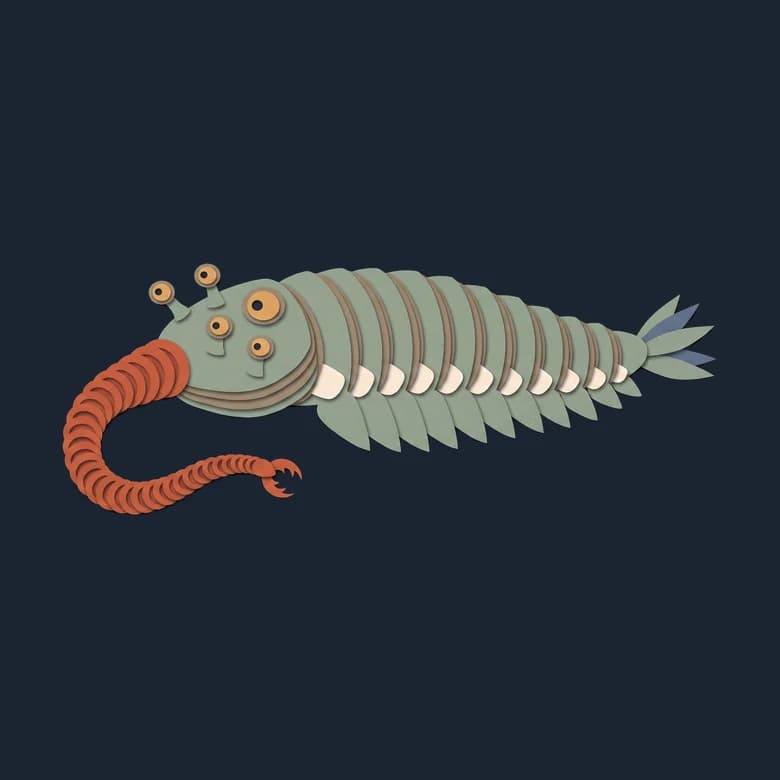
Half a meter of animal turns toward you. Two grasping arms open. Twenty-four thousand lenses find you. This is Anomalocaris, a hunter in the Cambrian ocean about 514 million years ago.
Its name means "strange shrimp." That's left over from the days when its arms and its mouth were dug up separately and named as different animals. Put it beside a dinner plate and its body is about twice as long. Flexible flaps ran down each side while a wave rippled back along its body, and computer models suggest it could turn without tumbling.
For a century its round mouth made it look like a shell crusher, with scarred trilobites as its victims. But the mouth plates couldn't close all the way, and models suggest they were poor at breaking hard armor. It was probably a catcher instead, steering softer animals into a mouth that worked like a flexible iris.
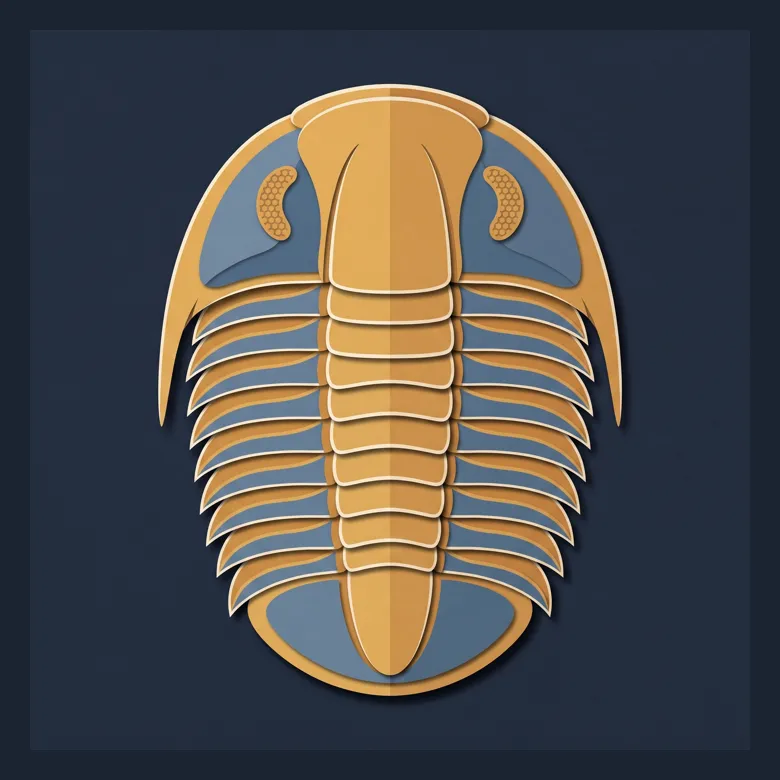
The eyes were the expensive part. Each one held at least 24,000 tiny units, packed into a fossil eye about three centimeters across. Hold a large coin beside your face and imagine every part of it watching on its own. Early trilobites managed about a hundred lenses each, cut from calcite, the crystal in limestone.
Here's the honest limit: a fossil eye keeps the lenses, not the brain behind them. So 24,000 lenses tell us about sharp eyesight, not a clever mind. And some other hunter may well have got there first and left no fossil at all.
What Anomalocaris shows is the whole plan gathered at one end of a body. Eyes find the target. A brain picks a direction. Arms catch. The mouth finishes. The hunt began the instant 24,000 lenses agreed where you were.