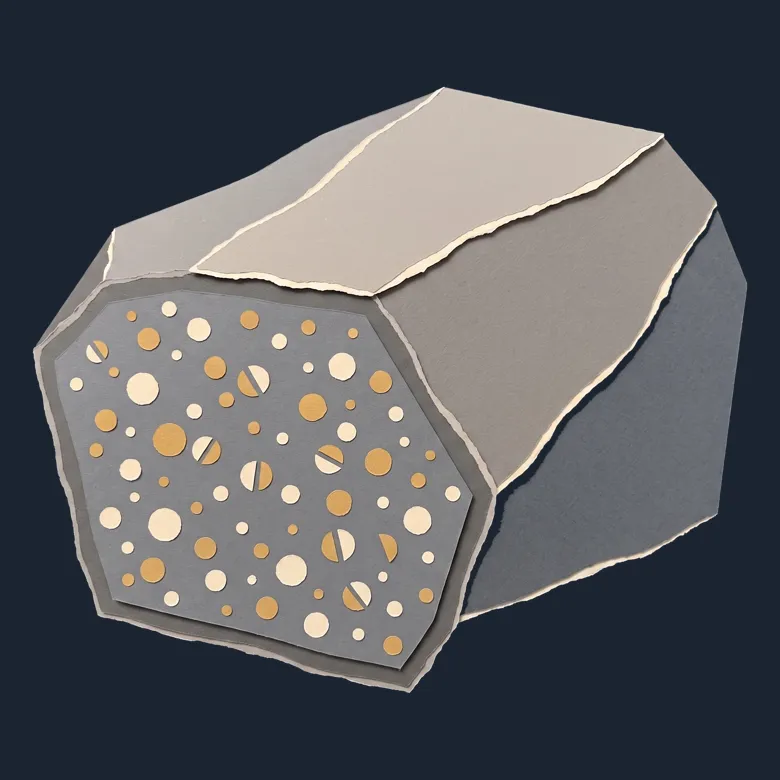
Cut open a dark space rock and you may find beads the size of pinheads. They were drops of melted rock before Earth existed. Now you could hold them in your hand.
Once a space rock reaches the ground, we call it a meteorite. Some hold those round beads, called chondrules. Others hold pale lumps that formed even earlier, when the young Sun still had a disk of gas and dust around it.
The pale lumps put the start of that solid record at about 4.567 billion years ago. The chapter compares the tiny error in such a huge age to knowing an adult's age within about 2 days. That date comes from space rocks, not a rock from Earth's birth.
Uranium atoms inside the rock slowly turn into lead. Scientists compare lead from several samples to work out how much was there at the start and how much has formed since. The pattern gives them a clock.
Here is the catch: a stone can hold pieces of different ages. Scientists still argue about small gaps between dates from different tests. Some grains even came from stars older than our Sun. One rock. More than one clock.