
What it was
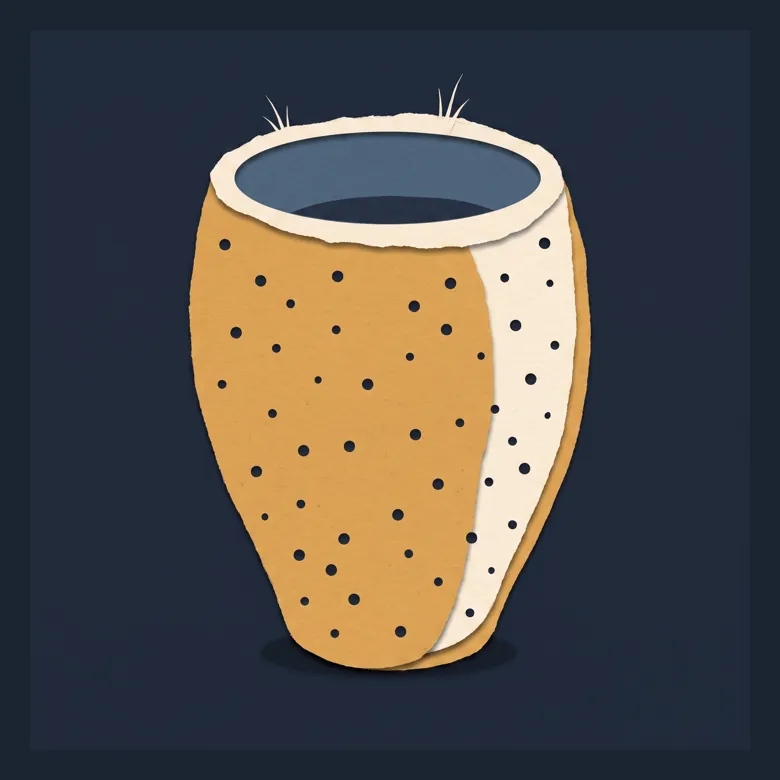
An animal spreads from a rock in a sheet shaped like an elephant's ear. Water flows through tiny holes in its body. A sponge can feed while staying in place, with no mouth to open and close.
Inside, cells catch food from the passing water. Other cells beat tiny tails called flagella to drive the flow through canals. The water leaves through larger openings. A sponge's body is a working set of passages, with cells doing different jobs along the route.
When and where
Most sponges live in the sea, from shallow shores to deep water. Some live in freshwater. Adults usually stay attached, but their young can swim before settling down. The water moving through an adult brings oxygen as well as food and carries waste away.
The show gives a sponge a brief cameo at the end of Chapter 017. You see it in the row of living things used to picture life's shared choice of molecular handedness. It is a glimpse, with this page taking a closer look at the animal.
How big
Sponges grow in many shapes. Some make tubes about 3 feet (1 meter) tall; others spread as sheets or form mounds. The elephant-ear shape is one of many, so a single sponge portrait cannot show how the whole group looks.
How we know
Microscopes reveal living cells and the skeleton that props the body up. Tiny mineral pieces called spicules help distinguish sponge groups. Some have softer support made of spongin. Natural bath sponges use that softer skeleton; a loofah scrubber comes from a plant.
Still a mystery
Some sponges creep slowly in tanks. Nobody knows how much that movement matters in the wild. A fixed-looking animal can do more than the first glance suggests: cells keep water moving through its body.