This reef took twenty million years to build. The animal that built it is gone. Every one of them, everywhere, for good. And for the next hundred million years, nothing took its job.
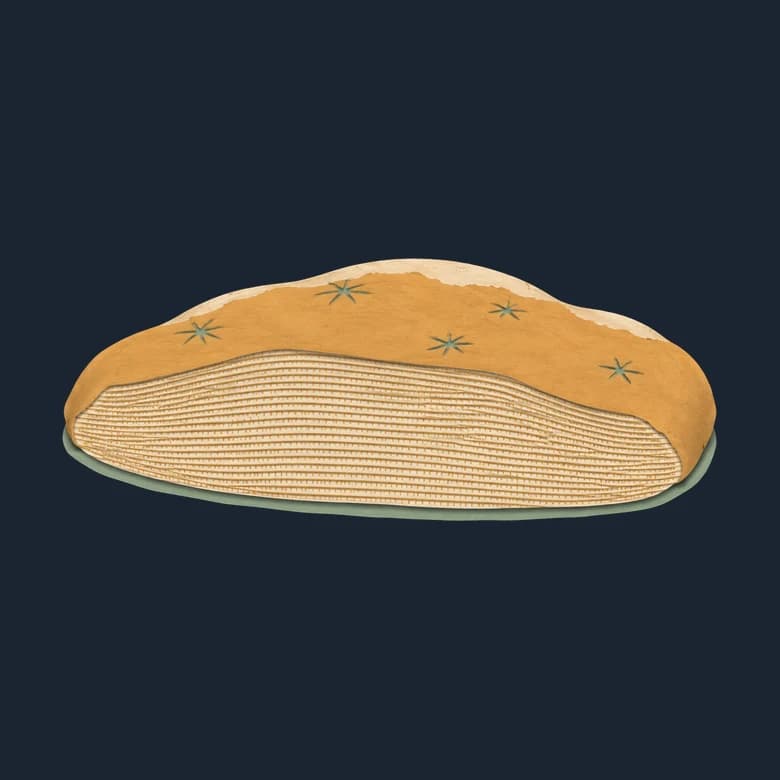
You can still walk this reef. It stands in the Australian desert, 350 kilometers of it. Drive the length of that wall and you are behind the wheel for four hours. Reefs today are built by corals. This one was mostly built by sponges called stromatoporoids. They grew as low domes, two meters across and half as tall, laying down sheet after sheet of lime. Cut one open and the sheets stack like the pages of a closed book.
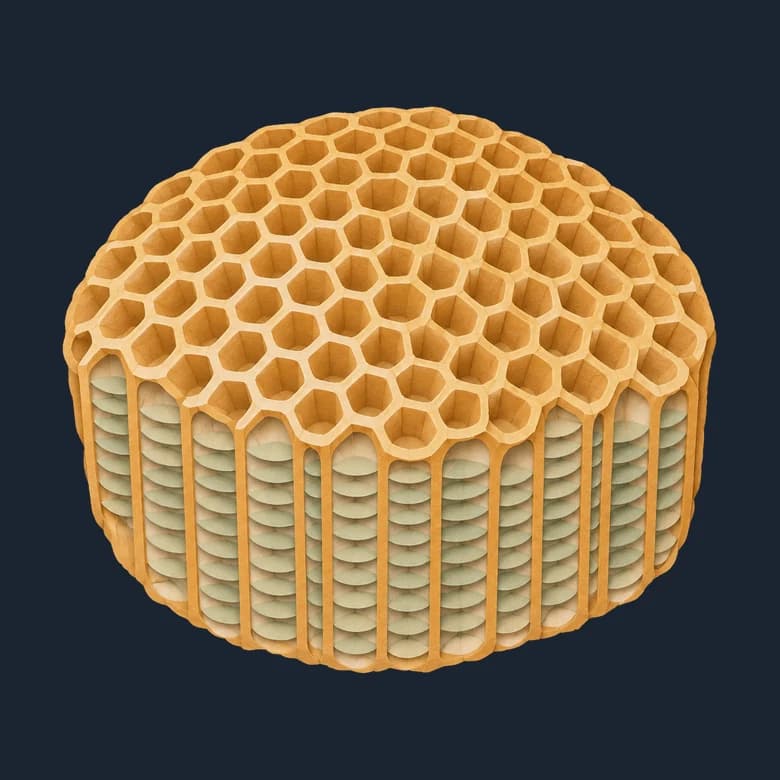
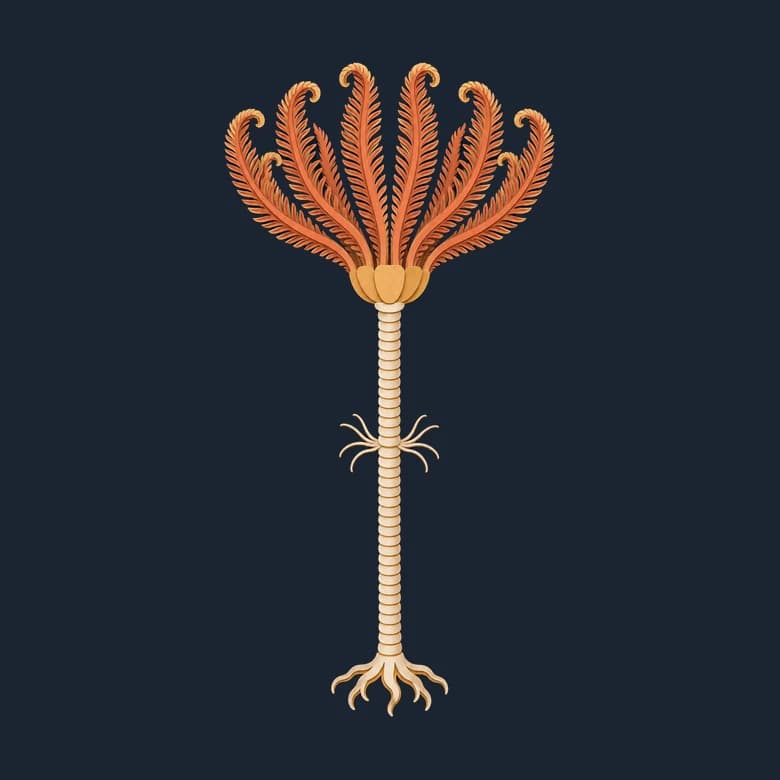
Corals were here too, but not the corals you know. These grew as honeycombs of narrow tubes, one animal to a cell, with floors stacked inside like shelves. Together, sponge and coral made a wall hard enough for the open sea to break on. And the wall was crowded. Lift one slab and you get shells packed edge to edge, twenty kinds in the space of a paperback. Sea lilies stood over them in meadows. They are animals on stalks, not plants.
Then that world ended, but not in a day. The rocks record something like eight separate bad moments, spread over twenty-five million years. The last one has a name: the Hangenberg. Ice piled up near the poles and the sea fell away, leaving the wall standing in the air. Then the water came back with almost no oxygen in it. The rock keeps the receipt. Mud under water with oxygen gets churned by burrowing animals. All over the world, at exactly this level, the mud turns black and keeps every thin layer.
How bad was it? Count families of sea animals, and about one in five is gone. Count species, and the estimates run from four in ten to three in four. Those numbers are nowhere near each other. And they hide a stranger finding. The dying was bad, but not unheard of. What collapsed was the other side of the ledger. The sea went on losing species, and very nearly stopped making new ones.
And the reef? It never came back. Reefs did, of a sort: mounds of lime mud, crusts made by microbes, heaps of broken stems. What did not come back was the frame. Building that wall again took an animal with a different skeleton, and it does not show up until the Triassic, something like 120 million years later. An extinction is normally counted by what died. This one you measure by what never happened next.