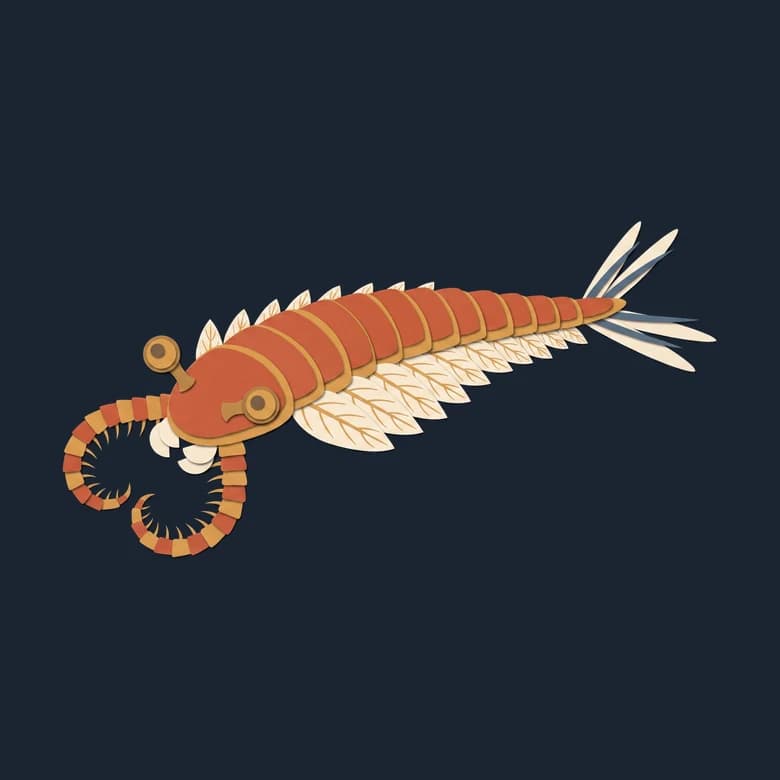
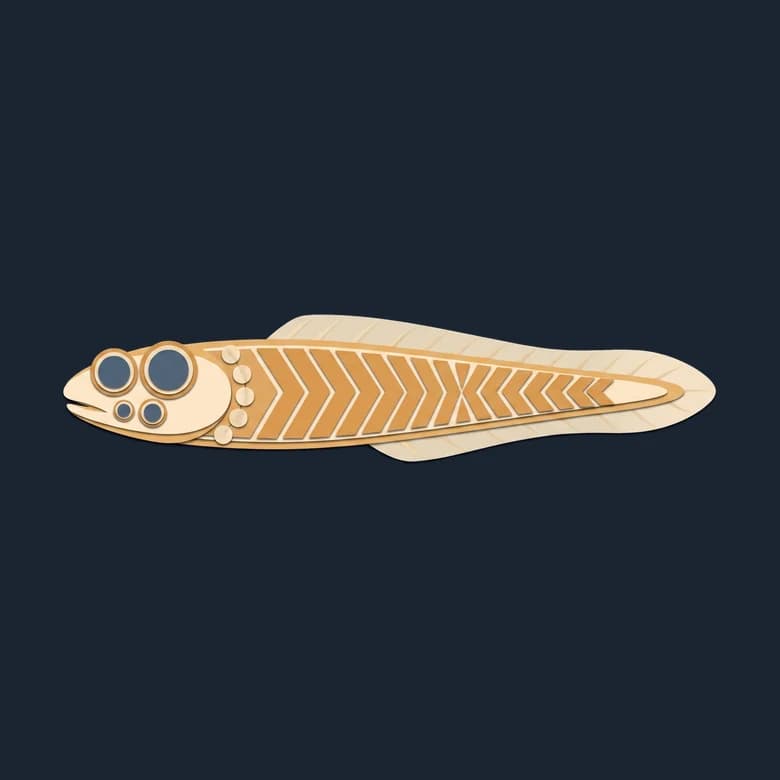
Something is looking at you out of an ocean 514 million years old. It's half a meter long, it swims fast, and its eyes hold more than 24,000 separate lenses. Twenty million years earlier, nothing like it existed.
Climb a cliff of that rock. At the bottom the record is quiet: a few shells, almost nothing with legs, eyes or a biting mouth. Then you cross one line, and within a stretch you could climb in an afternoon, almost every animal body plan still on Earth turns up. Legs. Shells. Jaws. Eyes. Guts. Nerves.
That window is about twenty million years long. Lay out Earth's whole history as a meter of paper and the event is four and a half millimeters. About the width of a fingernail.
So what switched the animals on? There are five suspects. Oxygen, except that sponges keep growing on half a percent of today's level. Predators: drilled shells from South Australia get thicker as the drilling spreads, the oldest arms race ever found. The genes, except the toolkit that builds limbs and eyes was lying ready for a hundred million years. The animals themselves, digging and hunting until the mud changed. And the rocks, when worn-away continents washed calcium into the sea.
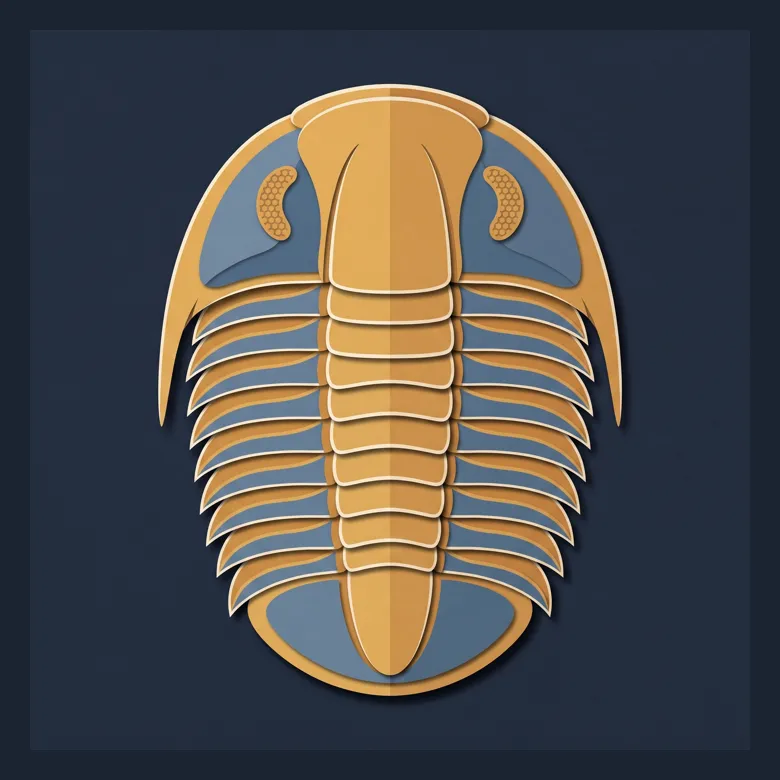
Each suspect explains how the event unfolded. None explains why it started when it did. Some scientists argue there was no explosion at all, only a spell of mud that happened to keep soft bodies. Trilobites push back: their hard shells fossilize almost anywhere, and they show evolution running about four times faster than normal, then slowing down.
Here's the honest answer: nobody agrees what started it. The field has stopped hunting for one culprit and now describes a cascade instead. A queue of causes, and an argument about the order.