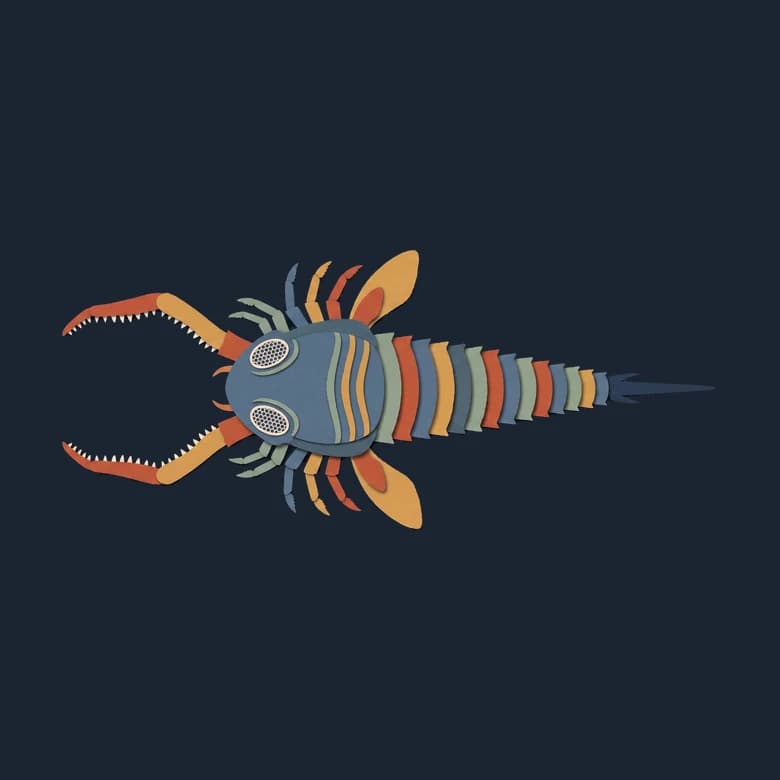
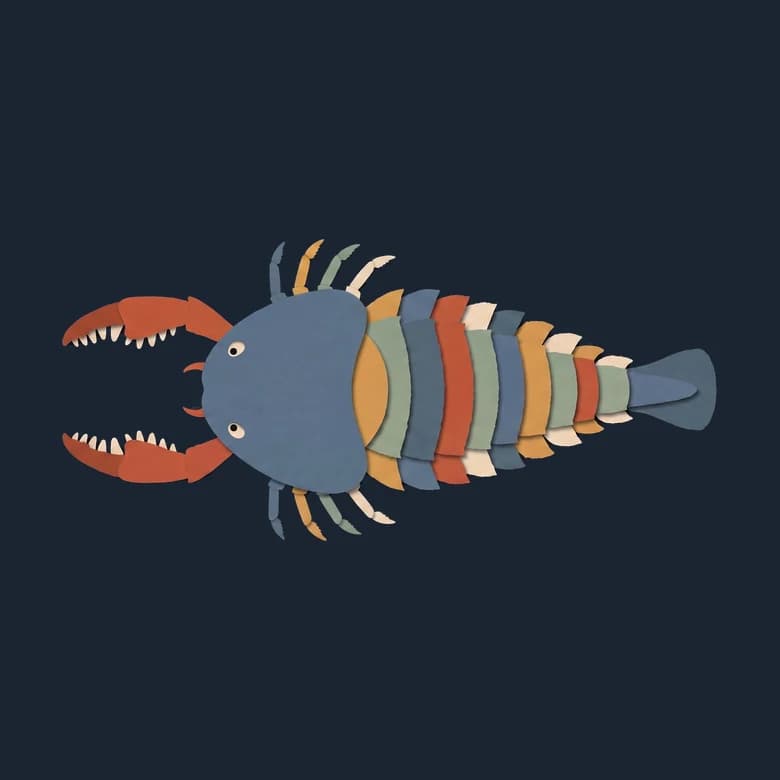
Nobody has ever dug one up. This is a sea scorpion, two and a half meters of hunter, 400 million years ago. And almost everything we say about its size is arithmetic.
It isn't a scorpion. That's a nickname that stuck. It's an arthropod, an animal that wears its skeleton on the outside. There were about 250 kinds, on every continent except Antarctica. The smallest were under two centimeters: a fingernail with legs.
The biggest has a name, Jaekelopterus, and all we have of it is a claw from a quarry in Germany. The one whole piece measures 28.8 centimeters, about your forearm from elbow to fingertips. From that claw, a team worked out the rest of the animal two ways, got 233 and 259 centimeters, and published two and a half meters. The largest complete sea scorpion ever dug up is one and a quarter meters.
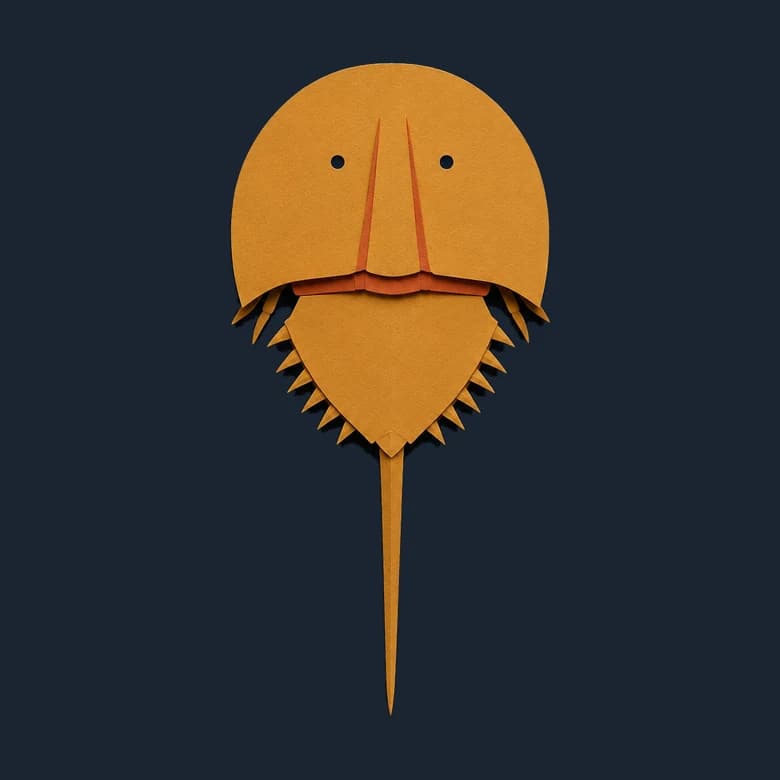
Was it really a hunter? The proof is the eye. Each one carried more than 3,500 lenses, all facing forward, each about a quarter of a millimeter across, the same as a living horseshoe crab's. Sharp eyes are expensive. An animal only pays for them if it has to find things that move.
A second giant swam in the same water. Its claw was a serrated blade, but its eyes were worse than those of the small animals around it. So two giants shared one bay and did not share a job. One chased. The other swept, scavenged and waited.
Most sea scorpion fossils aren't animals at all. They're shed skins, the suit the animal climbed out of and swam away from. A wardrobe never holds the biggest coat its owner ever wore. The giants in the sea were finished by about 390 million years ago, but the family lasted more than 200 million years. It survived by leaving, into rivers and lakes, at least seven separate times.