
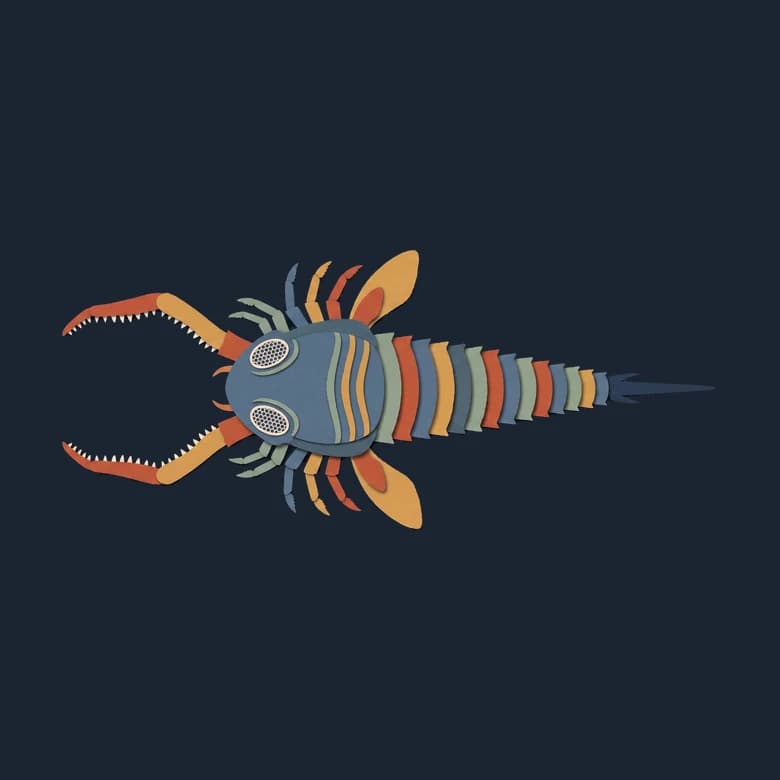
What they were
Not scorpions. That's a nickname that stuck. Sea scorpions were arthropods, animals that wear their skeleton on the outside. Scientists call them eurypterids. There were about 250 kinds, on every continent except Antarctica, and the smallest were under two centimeters long.
The biggest one
Jaekelopterus is known from one claw, found in a quarry in Germany. The whole piece measures 28.8 centimeters, about your forearm. From it, a team calculated an animal two and a half meters long, a doorway laid on its side. Nobody has ever dug up a whole one anywhere near that size. Each of its eyes carried more than 3,500 lenses, as sharp as a living horseshoe crab's.
Still a mystery
Why did they get so big? In 2024, a team tested the question across 138 species. Temperature, chemistry and competition didn't fit. Getting enormous happened thirteen separate times, in animals that were barely related, and nobody can yet say why.
What happened to them
The giants in the sea were finished by about 390 million years ago. The family lasted more than 200 million years by moving into rivers and lakes, at least seven separate times. Most of their fossils are shed skins.