This bite hit with the weight of a horse. There were no teeth in it. Just two blades of bone, grinding each other sharper with every bite. Nothing in its sea could stop it.
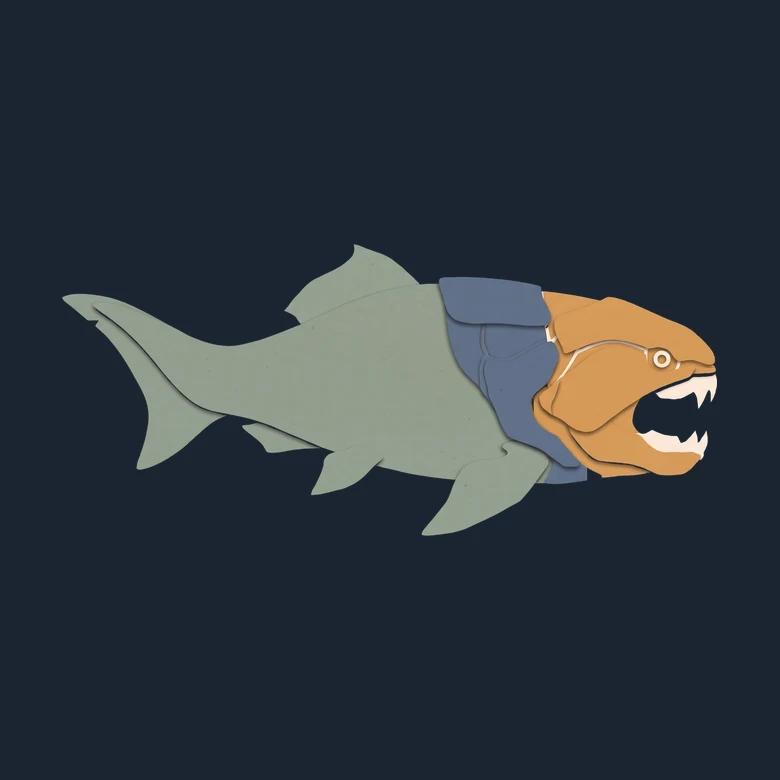
This is Dunkleosteus. It was a placoderm, a name that means "plated skin." Its head and chest were locked inside a shell of bone, like a helmet and a breastplate. Behind that, the body was soft cartilage, which rots, so only the armor made it into the rock. For decades, books drew it up to ten meters long. In 2023, one study compared its head with almost a thousand kinds of fish. It points to about three and a half meters, built like a barrel.
The real weapon was a hinge. When it struck, the helmet tipped up and the lower jaw swung down. The mouth snapped open in a fraction of a second, water rushed in, and the prey came with it. Then the jaws closed, with a force of more than 5,000 newtons near the back of the jaw. That is roughly a horse, standing on one knife edge.
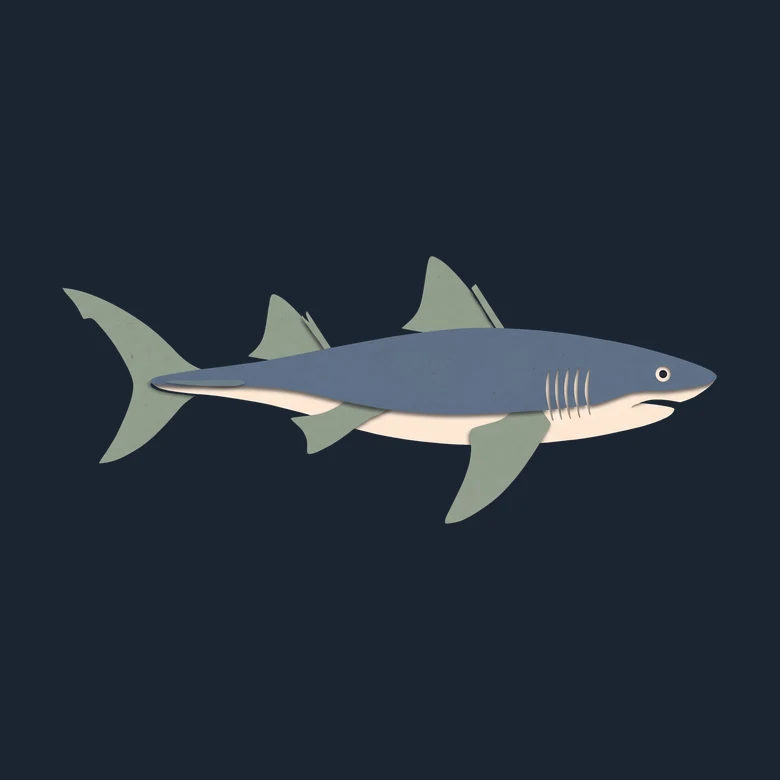
Its best fossils come from Ohio, from a layer called the Cleveland Shale, which also holds the early sharks that swam beside it. That rock is black, and black rock is a clue. Black mud builds up where the seafloor has no oxygen. The deep water beneath this hunter was running out of air.
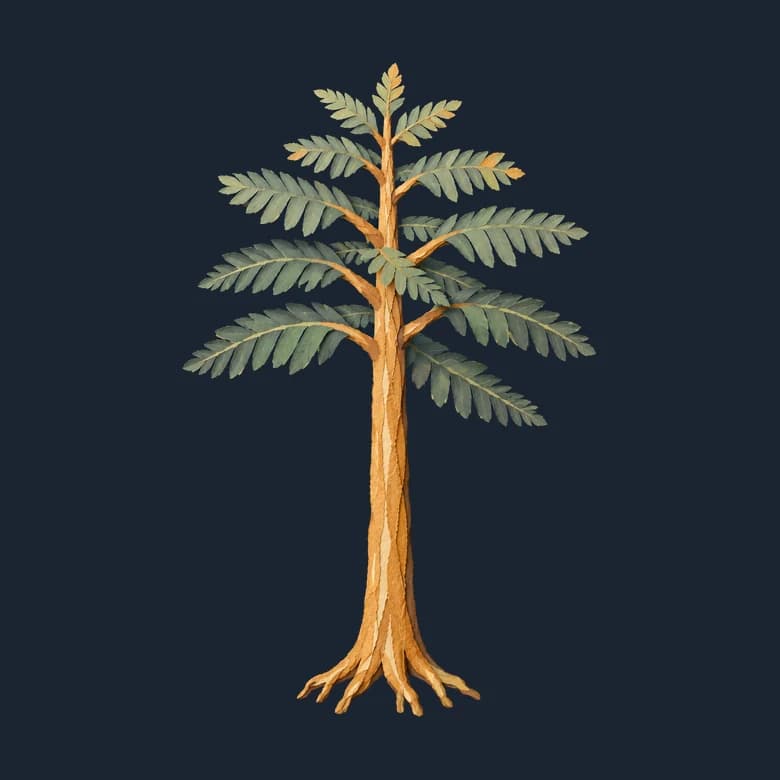
Where did the oxygen go? Look at the land. The first true forests were spreading, with deep, woody roots. Roots crack rock, and broken rock releases nutrients. Rain washed them into the sea, tiny algae bloomed, and when the algae died and rotted, the rotting used up the oxygen below. Forests are the leading suspect. Scientists still argue about how much of the blame they carry.
About 359 million years ago, it happened again, while ice spread and the seas fell. This time the armor couldn't ride it out. Every placoderm on Earth disappeared. Sharks and small, fast-breeding fish inherited the sea. Nothing in its sea could stop that bite. What finished it was growing on land, one root at a time.