Four Arctic summers, digging for one fish. A fish nobody had ever seen. They had only predicted it: its age, its rock, even its shape. And on the fourth summer, the rock gave it up.
In water, a fish weighs almost nothing. Take the water away and its whole weight lands on its belly. It can't lift itself. It can't even turn its head, because a fish has no neck.
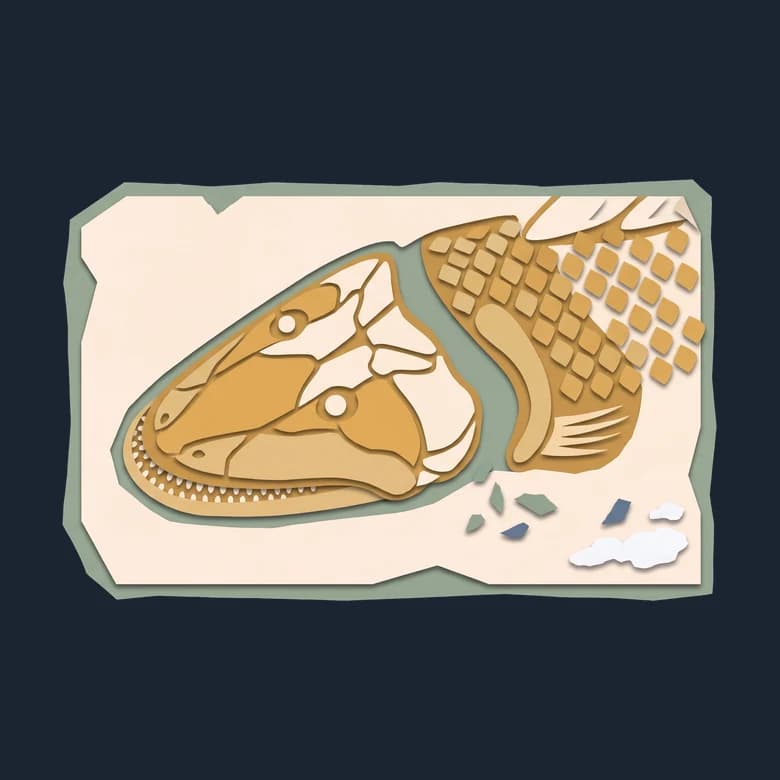
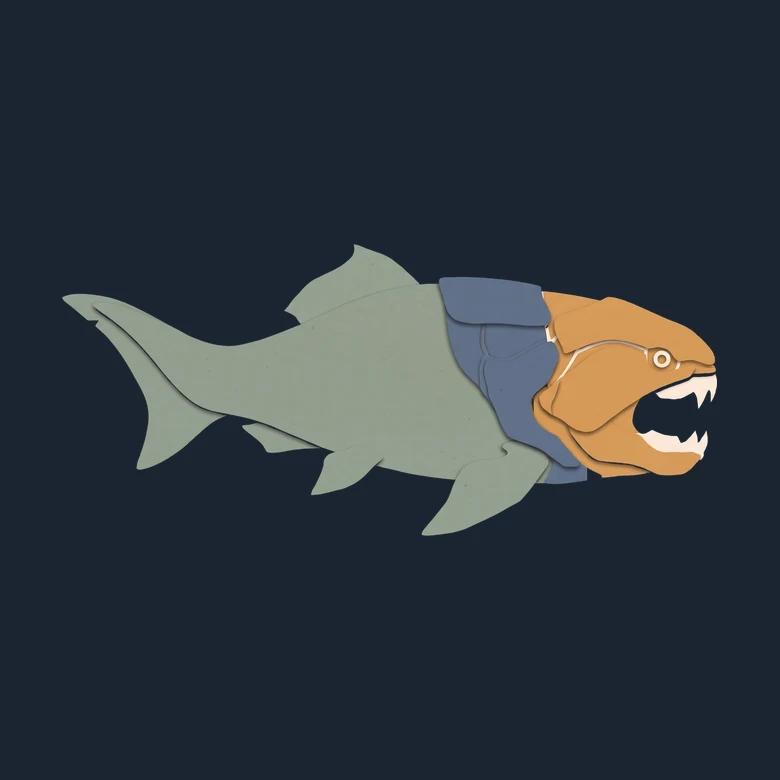
By the 1990s, scientists had both ends of the story: fish with fleshy fins, about 380 million years old, and animals with legs, about 365. Nothing in between. So Neil Shubin and his team made a bet. The in-between animal should sit in rock about 375 million years old, laid down by rivers, and lying bare. They found all three on a map in a geology textbook: Ellesmere Island, in the Canadian Arctic. In July 2004, a flat snout showed at the bottom of a quarry.
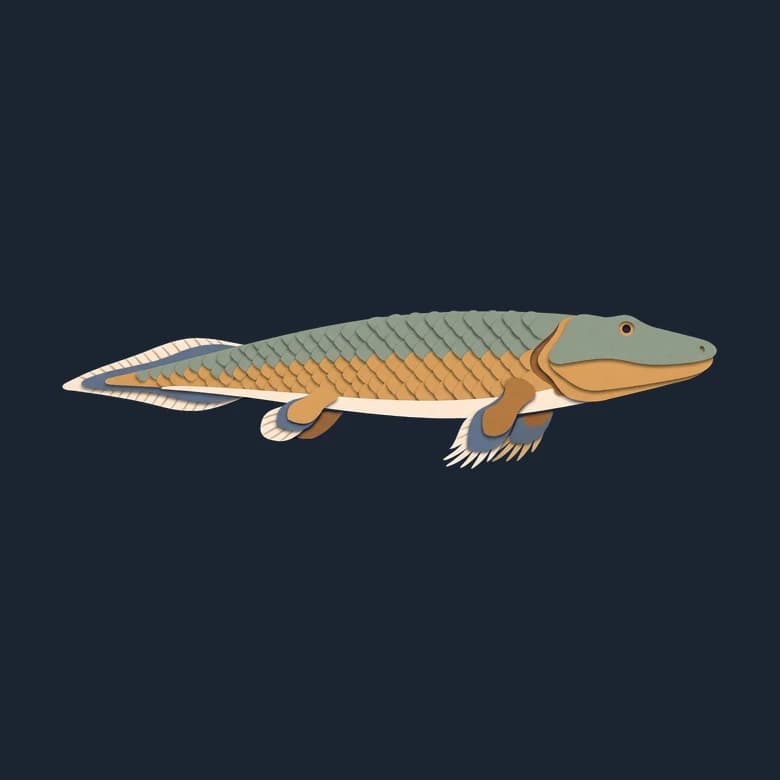
They named it Tiktaalik, a word in Inuktitut for a big freshwater fish. It had scales, fins and gills. But its head was flat like a crocodile's, with its eyes on top, and it could lift that head without moving its body. It had a neck. Inside its front fin: one bone at the shoulder, two below it, then a cluster of small bones that could bend like a wrist. That is the plan of your own arm. Tiktaalik could plant its fins and push its chest up off the mud. A push-up, from a fish.
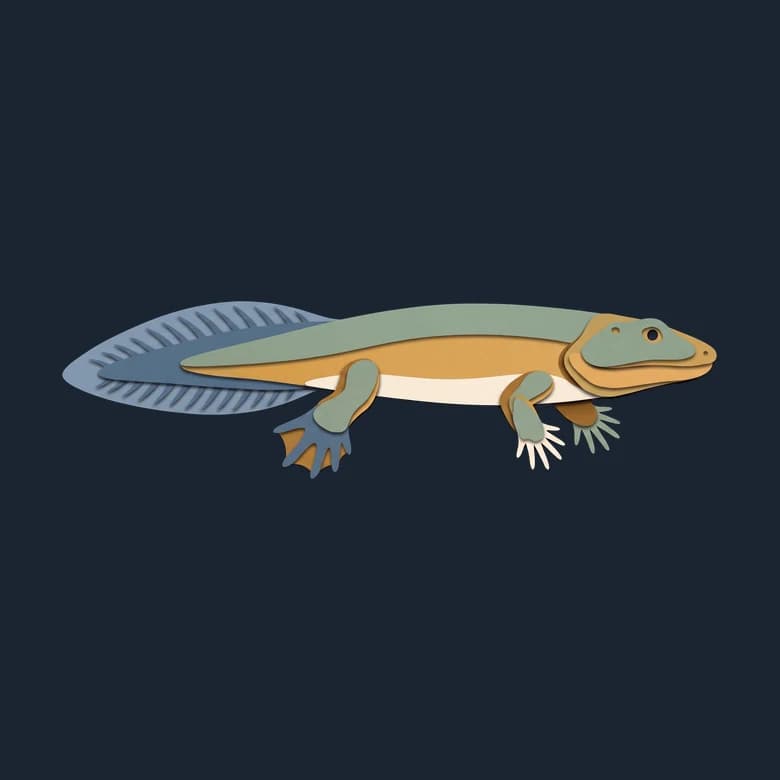
The neat version has a problem. A quarry in Poland holds tracks about 395 million years old, twenty million years older than Tiktaalik. If they are footprints, and not everyone agrees, something was already walking. So Tiktaalik was a cousin, not a grandparent. About ten million years after it, Acanthostega had real legs, with eight fingers on each hand. Those legs were still for the water, for pushing through weeds.
So how did a fish come onto land? Not in one step, and not on legs. A neck came first. It already had lungs. Then fins with wrists, strong enough to lean on. Then legs, built for the water. Now bend your wrist. That joint is built on the same plan as the fin that fish used to push itself off the mud.