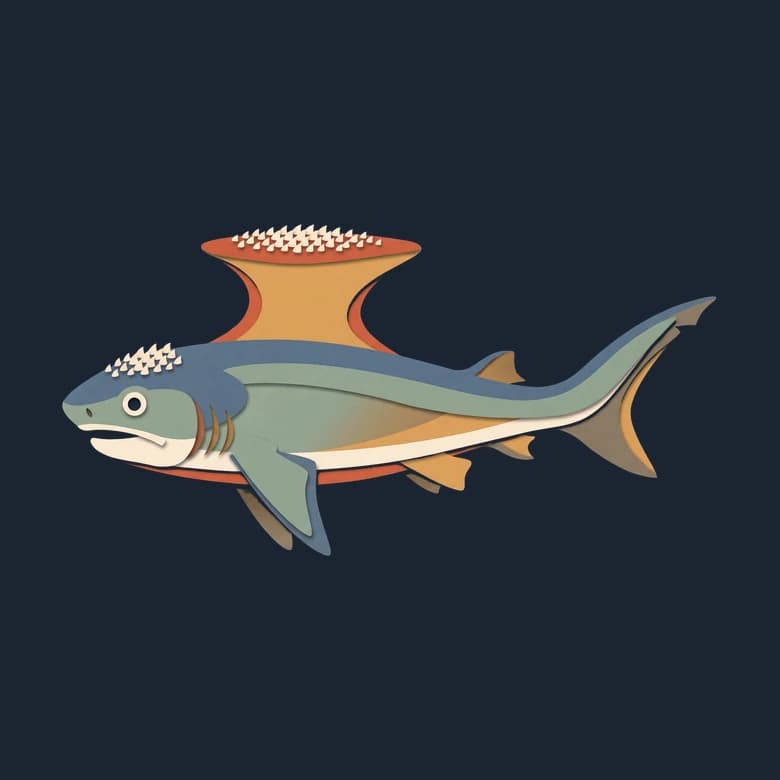
This animal grew an anvil on its back. Then it covered the top of it in teeth. Nobody has ever worked out what it was for.
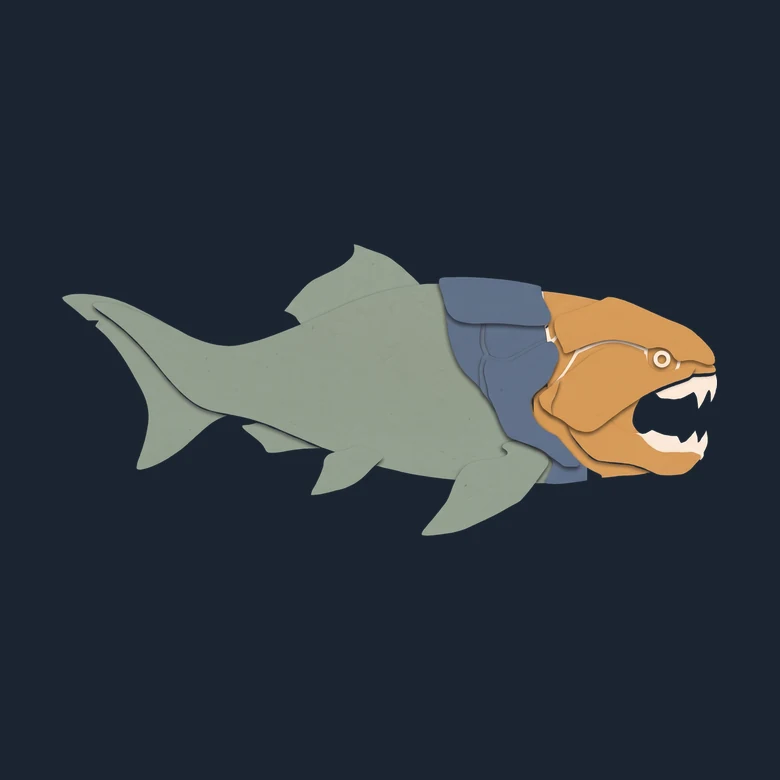
Fourteen million years earlier, the sea emptied. Every armored fish on Earth died, and nothing replaced them. The survivors were small. For about 36 million years, almost nothing in the ocean grew longer than a meter. But an empty sea is an opening. Into it came sharks and their relatives, and they went strange. 443 kinds have been catalogued from this stretch of time. The count peaks in the middle of the Carboniferous and never climbs that high again.
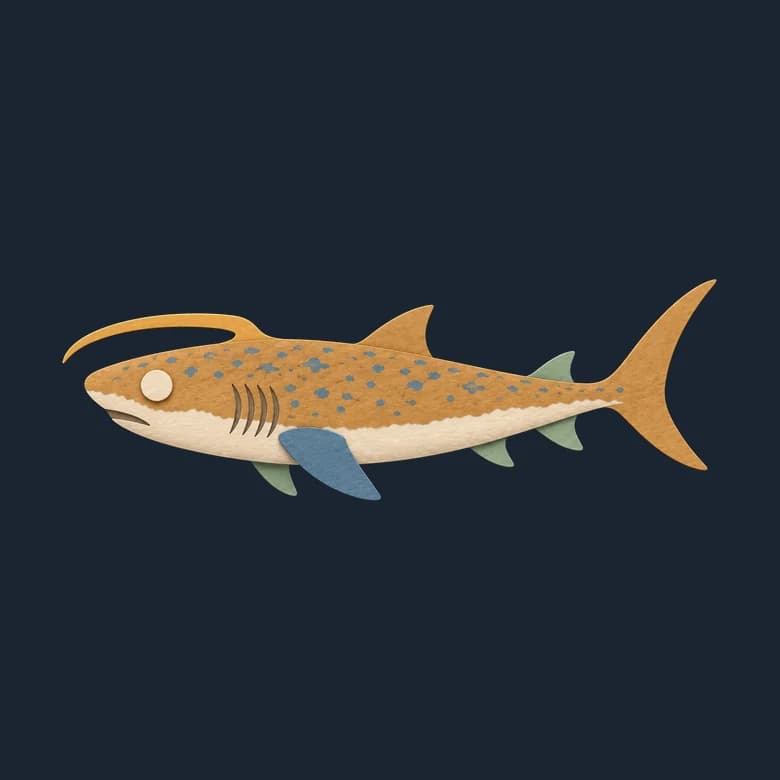
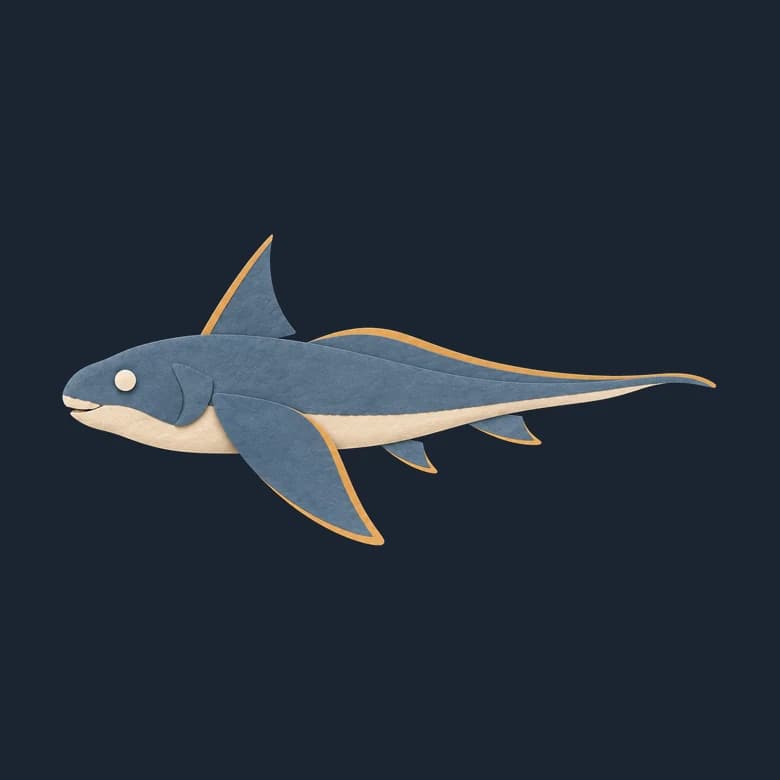
Start with the anvil. It sits where a back fin should be, built from a base plate, a spine and a brush of fine tubes. Rows of enlarged skin teeth cover the top, all pointing forward, with a matching patch on top of the head. Now the spike. This fish is hand-sized, fourteen and a half centimeters at most. A single flat spine rises behind its head and curves forward over its own skull, like a fishing rod bent above its eyes. Only the males carry it.
The spike comes from a quarry in Montana called Bear Gulch, a shallow tropical bay that turned to fine limestone about 324 million years ago. It has given up more than 5,000 fish and well over a hundred species. In that bay, sharks and their relatives are most of the fish species. No ocean on Earth works like that today. But there is a hole in all of this. A shark skeleton is cartilage, and it rots. About four in every five of these species are known from nothing but loose teeth, a spine or a few scales.
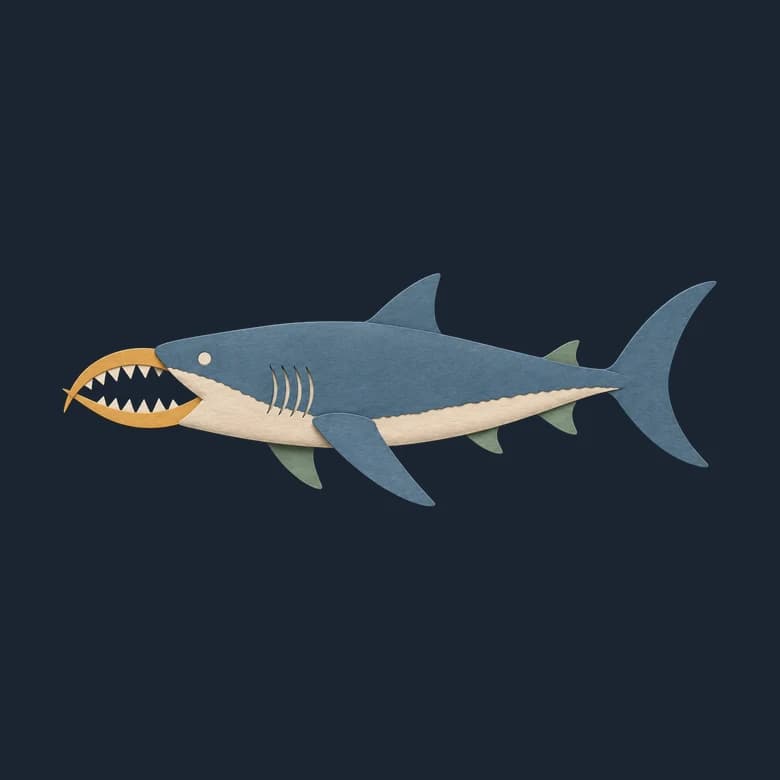
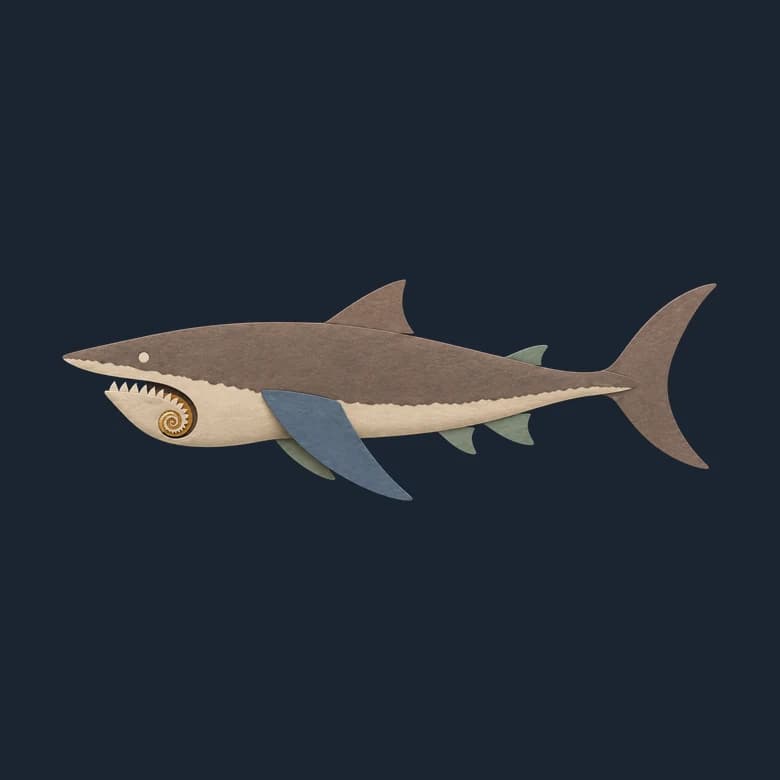
About 310 million years ago, Edestus grew a curved blade of teeth at the front of the upper jaw, and a second at the front of the lower. The biggest is 43 centimeters. The strangest came last, about 270 million years ago. Helicoprion carried a spiral of 117 teeth, 23 centimeters across. For a century people drew it on the snout, on the back, even on the tail. Then a scan in 2013 settled it. The spiral sat inside the lower jaw, and the animal never shed a single tooth.
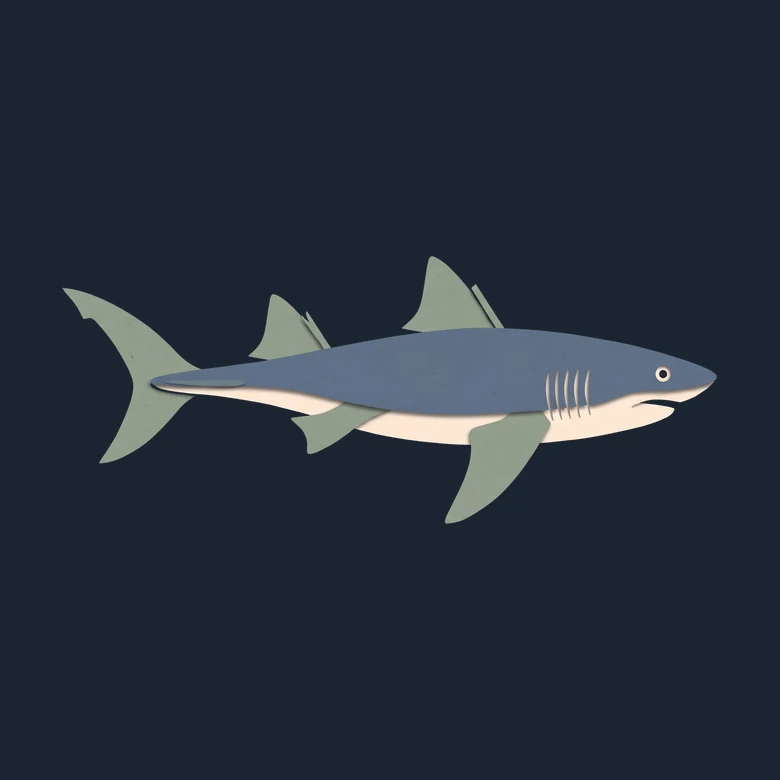
And it was not a shark. On the family tree, the buzzsaw and the anvil sit closer to the ratfish, the flat-toothed cousins still living in deep water today. The golden age of sharks was mostly a golden age of something else. The real ancestors of modern sharks were already swimming beside them, small and rare. We still cannot tell you what the anvil was for. We can tell you why it was possible. For a few tens of millions of years, the ocean had room for something that strange.