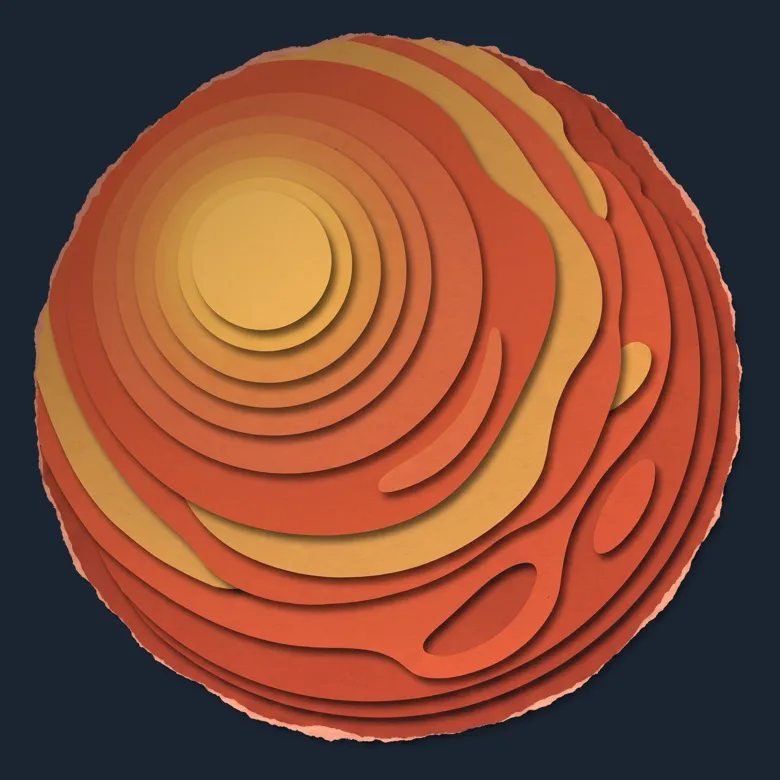
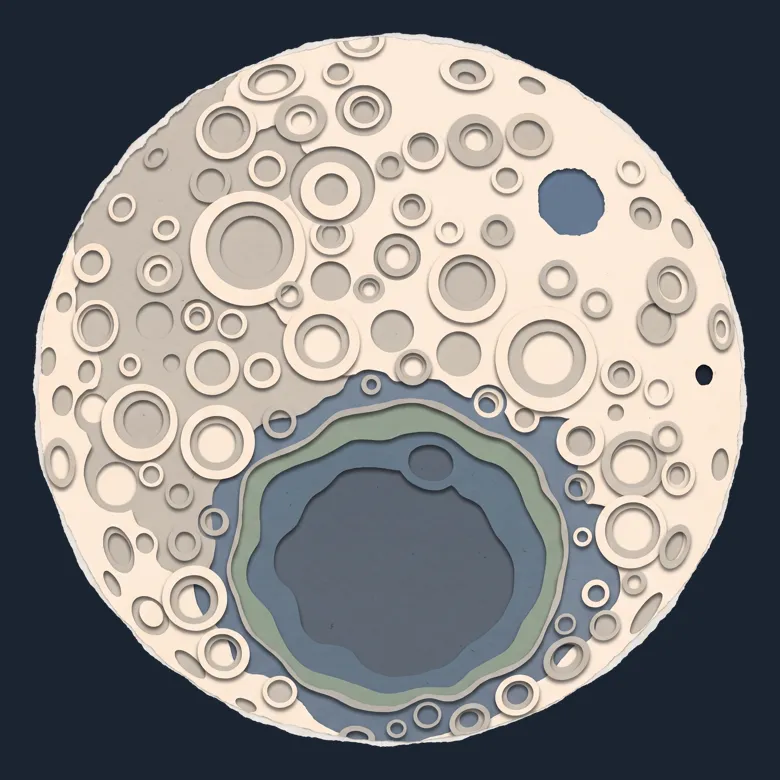
A tide rolls around Earth, but the waves glow. This sea is melted rock. Above it hangs the new Moon, much closer than the Moon you see tonight.
The Moon pulls harder on Earth's near side than its far side. That uneven tug stretches the planet. We call the stretch a tide. Even now, the ground under your feet rises and falls by about a school ruler's length. You cannot feel the slow lift.
Bring the Moon closer and the stretch gets stronger. Models suggest the young Moon raised huge swells in molten rock. Later, its tides flooded shores and left pools that shrank in the Sun. Some scientists think those wet and dry pools helped life's first chemistry. Others point to warm vents on the seafloor. Nobody knows where life began.
The Moon also steadies Earth's lean, which shapes our seasons. Scientists agree on that help; they still debate how wildly Earth would wobble without it.
Today we bounce lasers off mirrors left on the Moon to measure its distance. It is slipping away about as fast as your fingernails grow. As it goes, Earth's spin slows. The Moon inches out, and the day grows longer.