A crowded ocean is losing its living worlds. No rock falls from space. Ice grows, and the sea begins to pull back from the shore.
About 444 million years ago, almost every animal lived in the sea, and most of them lived on the shallow shelves around the continents: broad underwater plains flooded with sunlight. Those seas had never been richer. The number of kinds of sea animal had roughly tripled.
Then the planet cooled. Ice sheets spread across Gondwana, the great southern land near the South Pole. Water locked up on land can't stay in the ocean, so the sea level fell by roughly 80 meters. Picture an apartment tower standing on every old shoreline. The shallow homes below it were simply gone.
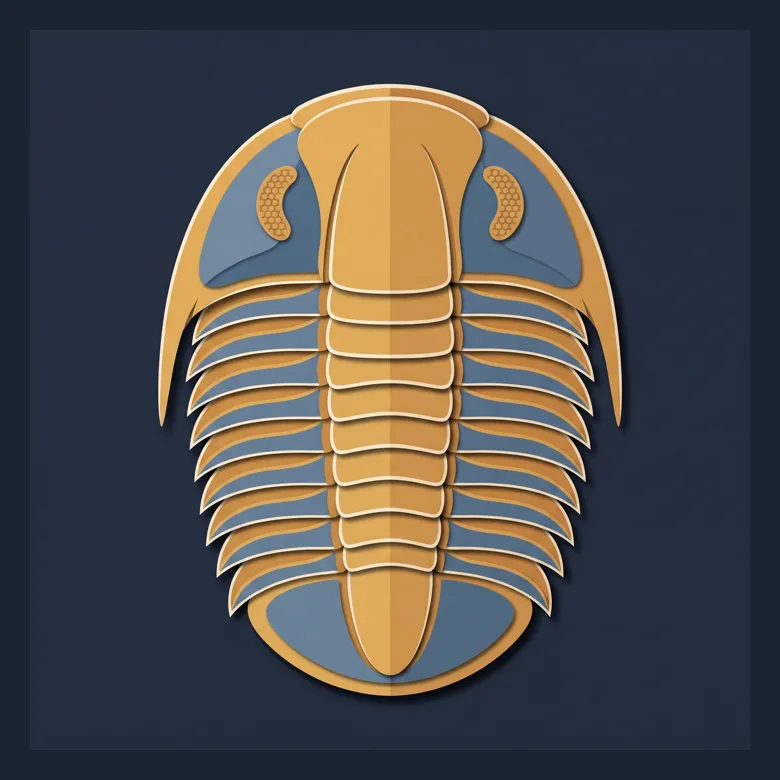
The animals didn't need to freeze. Their world disappeared sideways, like a wet sheet pulled off a table. Brachiopods, bryozoans, trilobites and graptolites all lost branches. Graptolites were drifting colonies, some shaped like pencil marks, and they changed so quickly that their fossils work like time stamps.
Then the climate turned again. The ice lasted perhaps less than two million years. When it melted, warm water came back, but the deep ocean may have lost its oxygen. So the survivors of the cold met a second blow in the warmth. Across the whole crisis, roughly 85 percent of the species in the sea may have vanished.
What set it off? Scientists still argue. Falling carbon dioxide, changes in how rock weathers, volcanoes and even a shattered asteroid have all been suspects. The strongest pattern is a changing climate, lost homes and changing seawater. Life wasn't erased. Within roughly five million years, the variety of sea life was recovering.