The first one was dug up in 1859. Since then, scientists have said what it was eleven times. A tree. A seaweed. A fungus. A lichen. Not one answer has held.
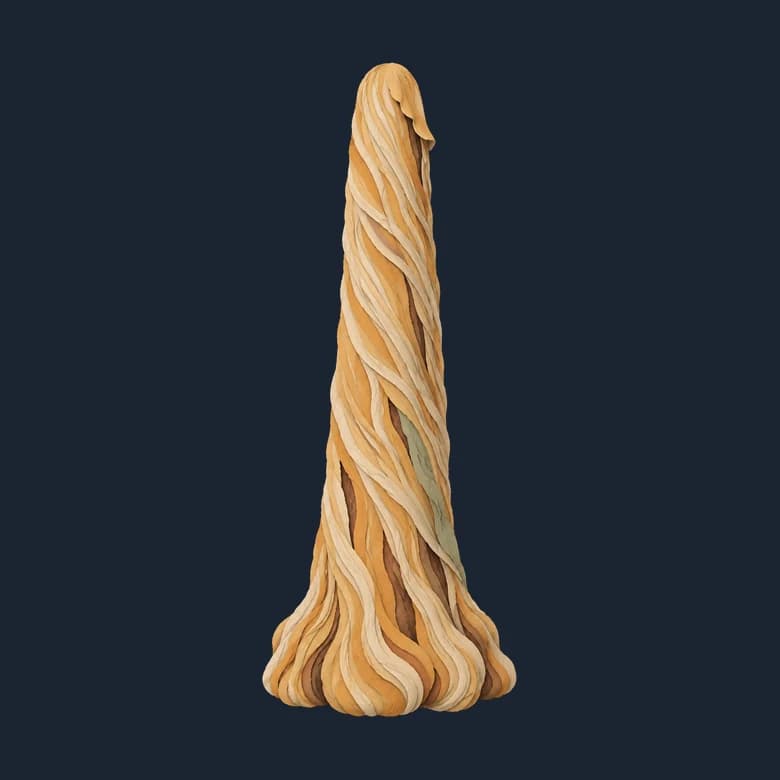
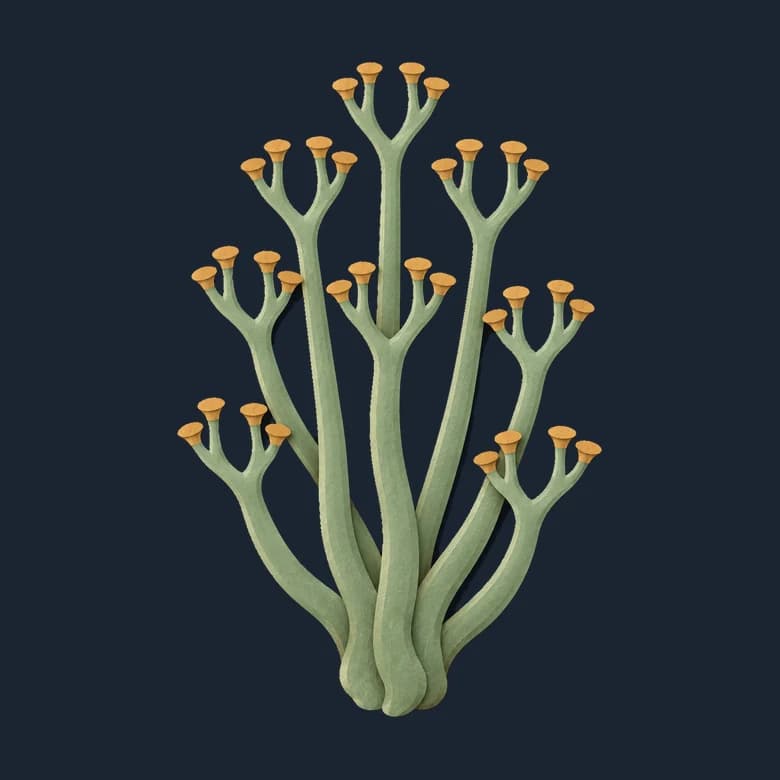
Go back to a land of bare rock and mud, with low green stems forking like tiny candlesticks. The tallest reach your shin. There are no trees anywhere. But standing over those stems are pale columns, with no leaves and hardly a branch. The thickest trunks ever found are about a meter across, wider than your front door. For roughly 40 million years, this was the biggest living thing on land. Its name is Prototaxites.
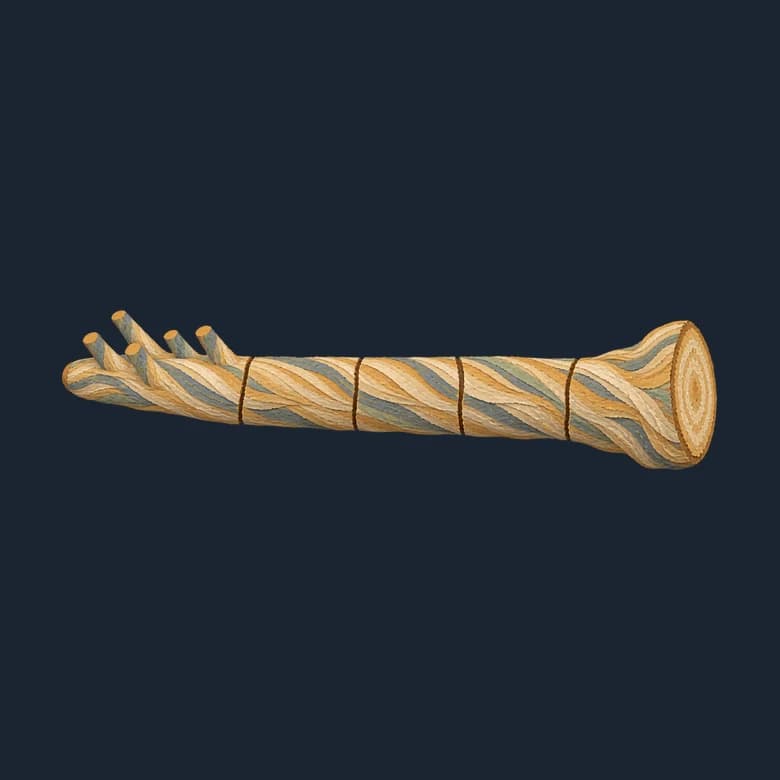
How tall was it? Honestly, nobody knows. Not one has ever been found standing. The longest ever dug up was a fallen log 8.83 meters long, nearly as long as a city bus.
The first one turned up on a beach in Canada. The geologist William Dawson thought he was looking at a rotten conifer log, so he named it Prototaxites, which means "first yew." Thirteen years later, a botanist in London looked inside one and saw no wood at all, just a mass of tangled tubes. A giant seaweed, he decided. Cut a trunk across and it has rings like a tree, but the rings are made of those tubes.
In 2001, a scientist at the Smithsonian made the case that the tubes were the threads of a fungus: a mushroom, in effect, as big as a tree. Six years later the chemistry seemed to agree. It should have ended there. Then, in 2026, a team in Edinburgh tested the walls of the tubes. A fungus builds its walls from chitin, the same tough stuff as a crab's shell. Prototaxites had none.
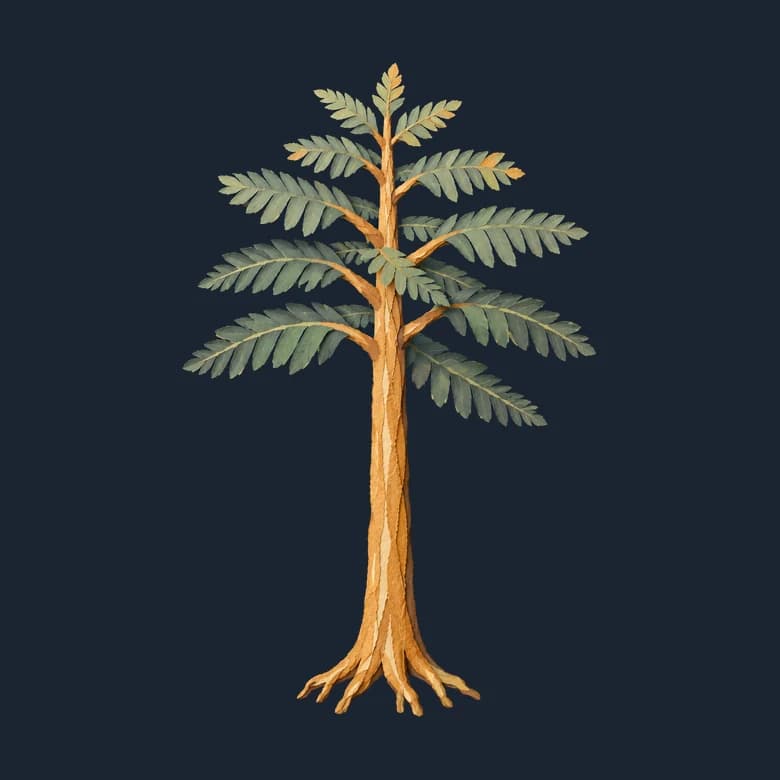
Their careful conclusion: it was probably not a fungus at all, and it may belong to a branch of life that has no survivors. Not everyone agrees. Every answer so far has come from a list of things alive today, and it keeps not fitting. By this date real trees had arrived, with wood and leaves. A few million years later, the giant was gone.